MFAH Kinder Building
3 min read
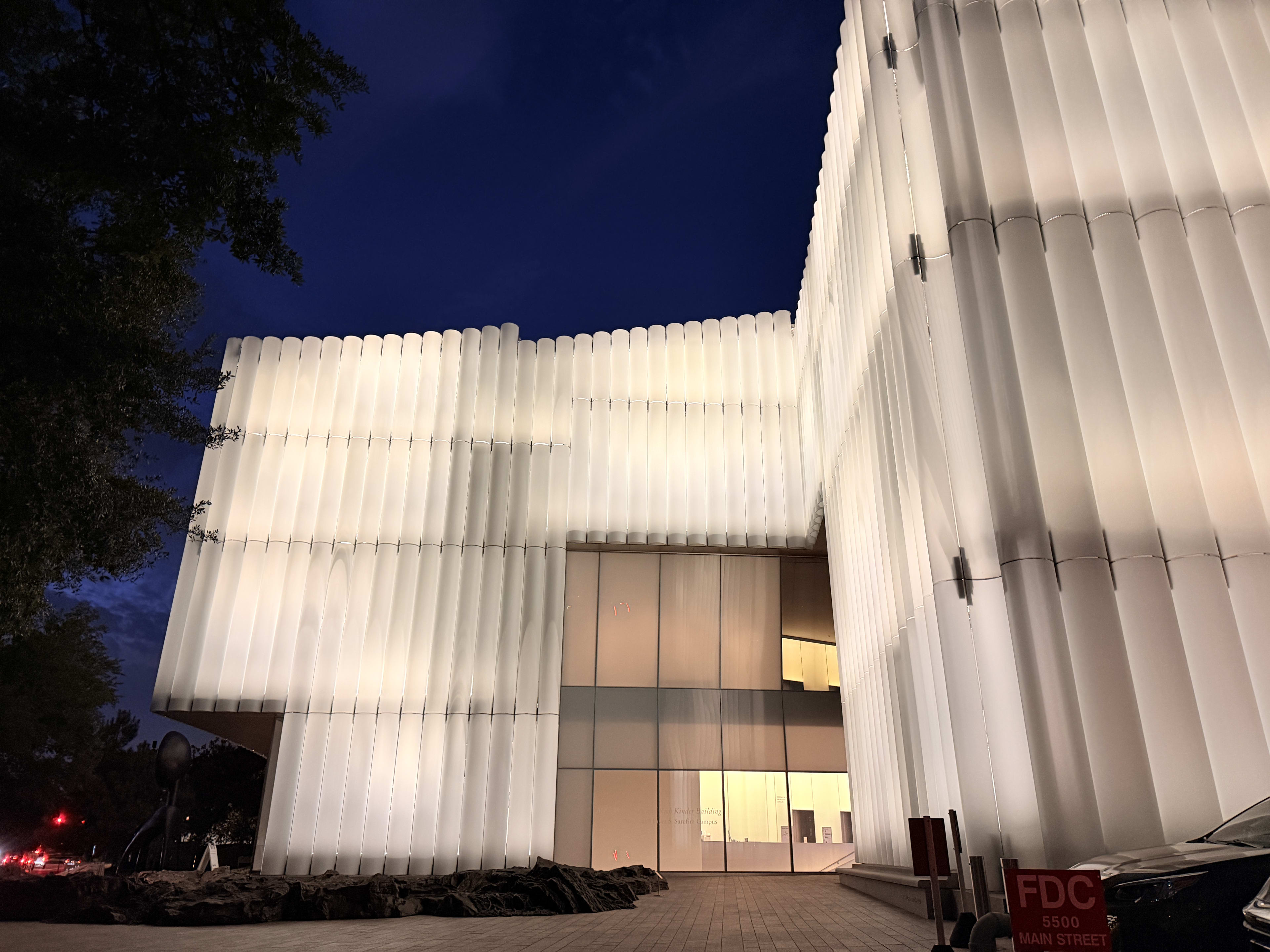
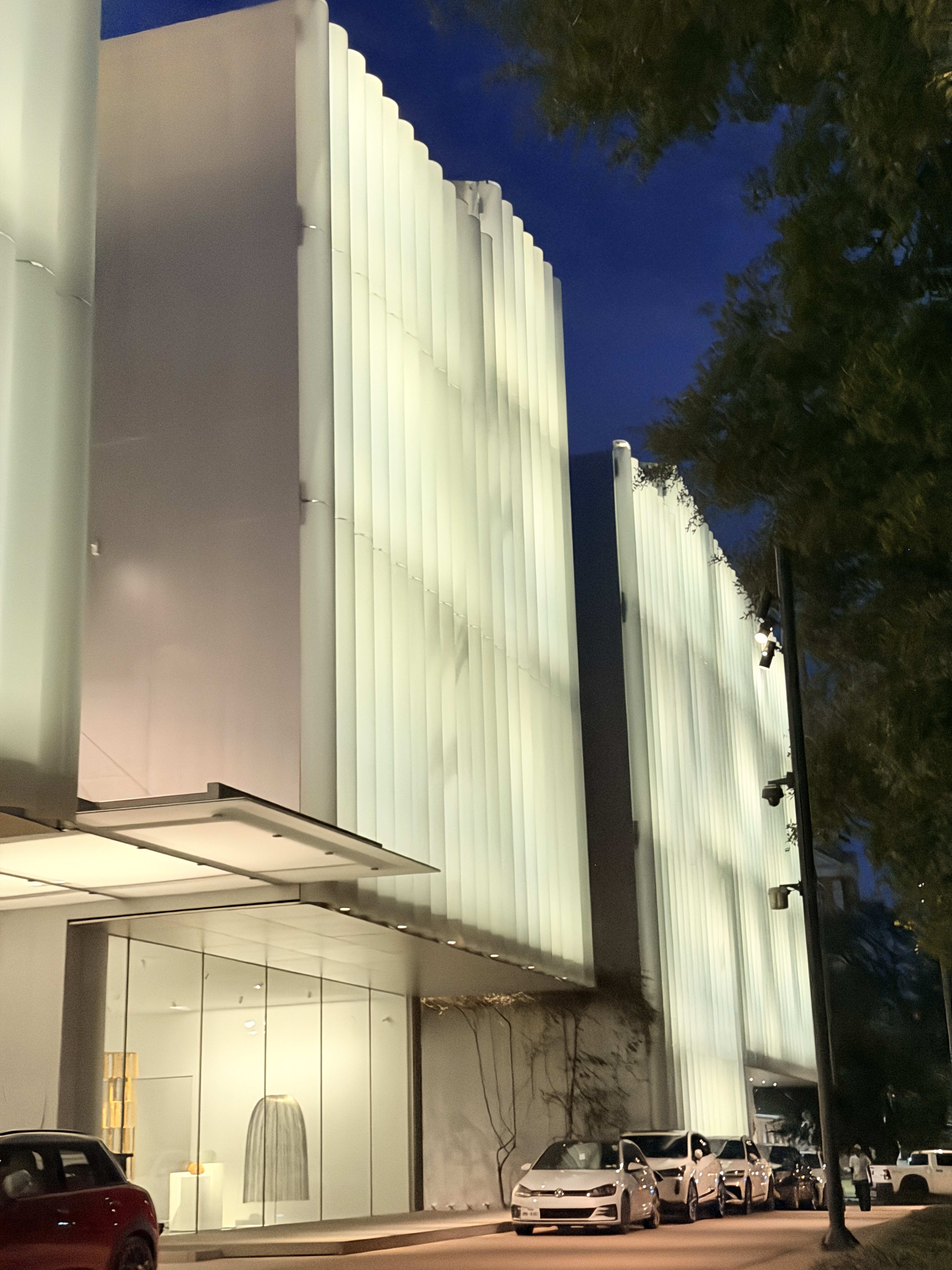
The Nancy and Rich Kinder Building does not have walls in the ordinary sense. It has tubes — seven large, curving volumes of translucent glass that glow softly from the inside, their surfaces catching and scattering the Houston light. At dusk the building becomes a lantern.
The Tubes
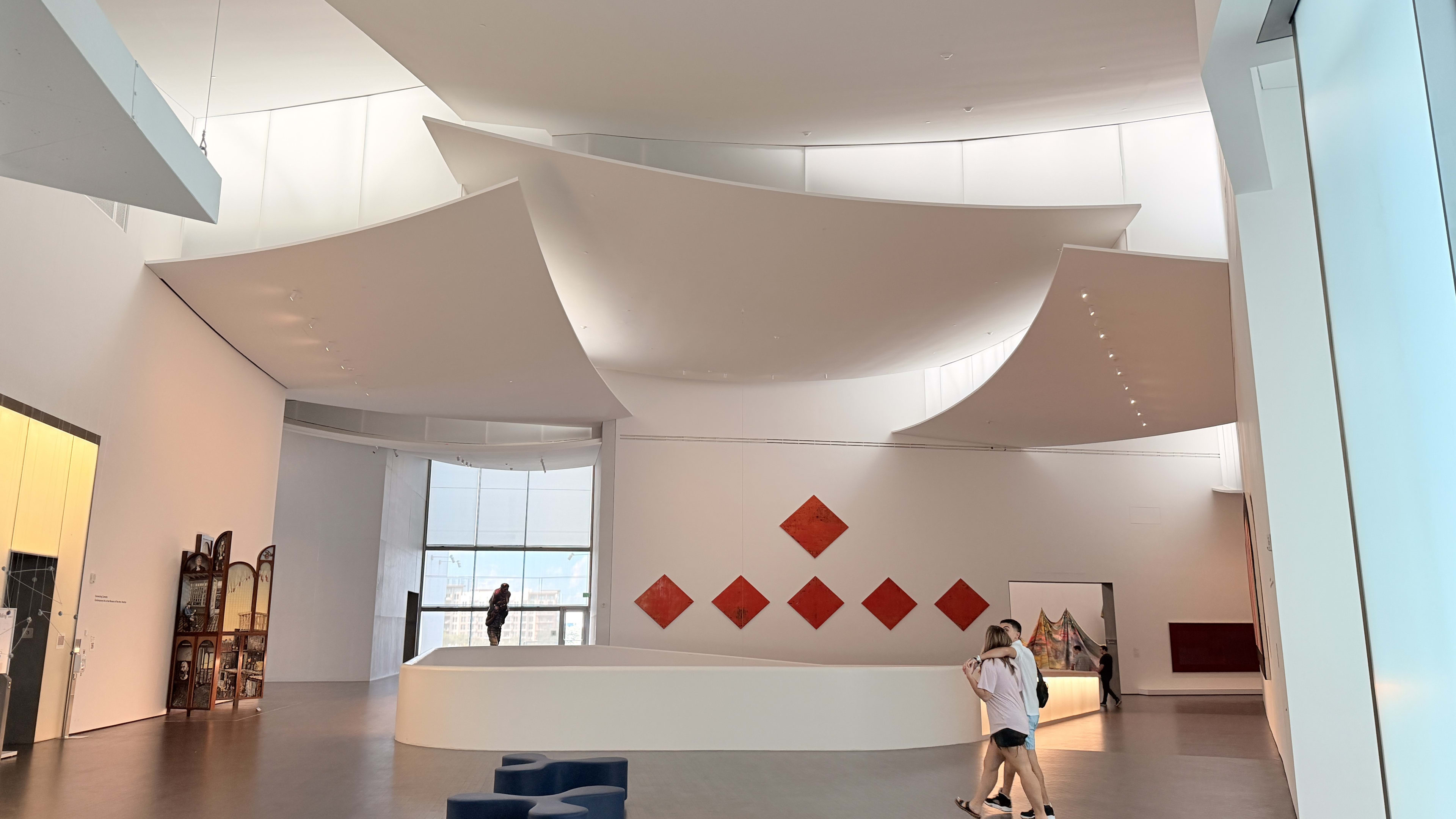
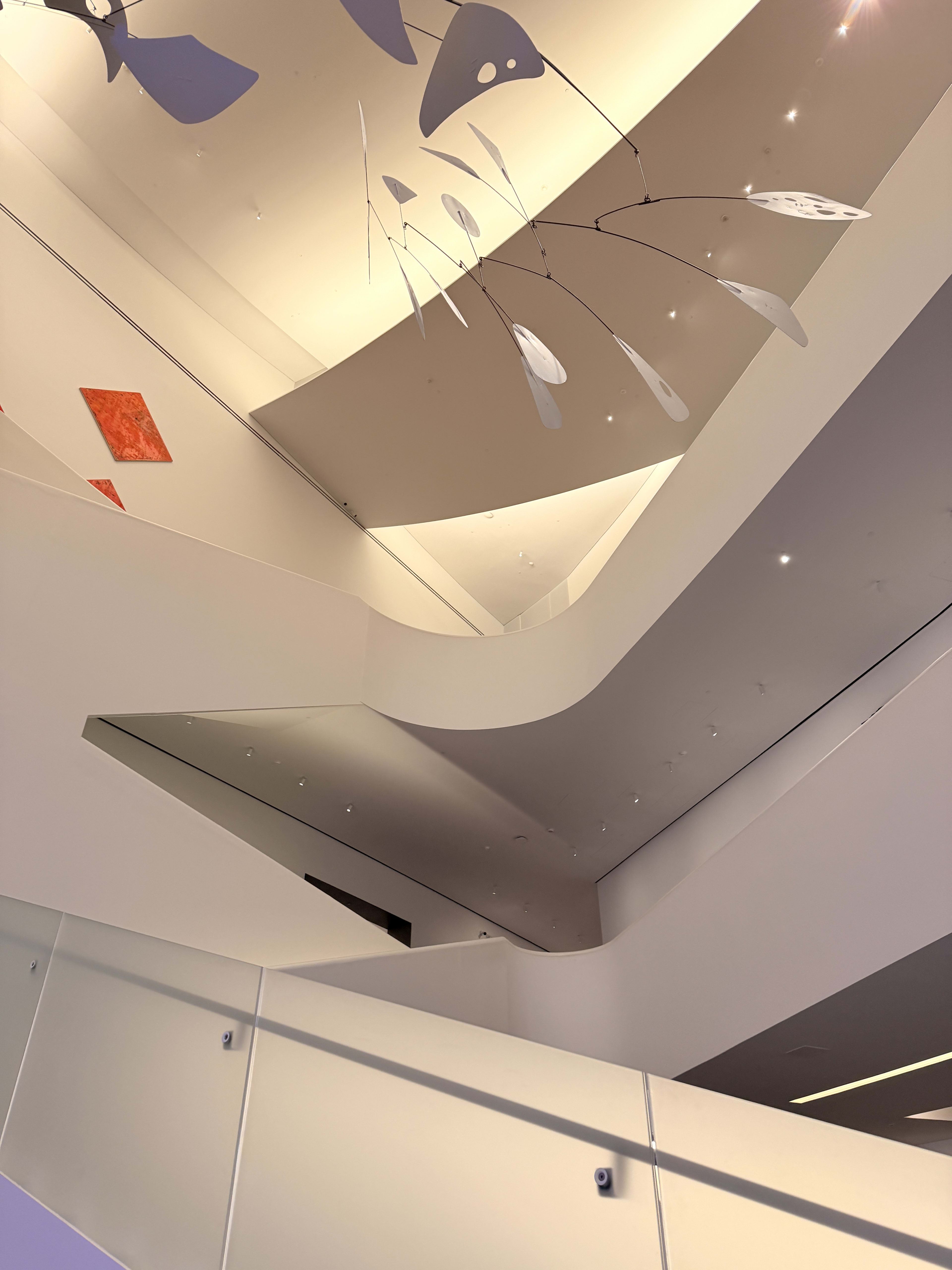
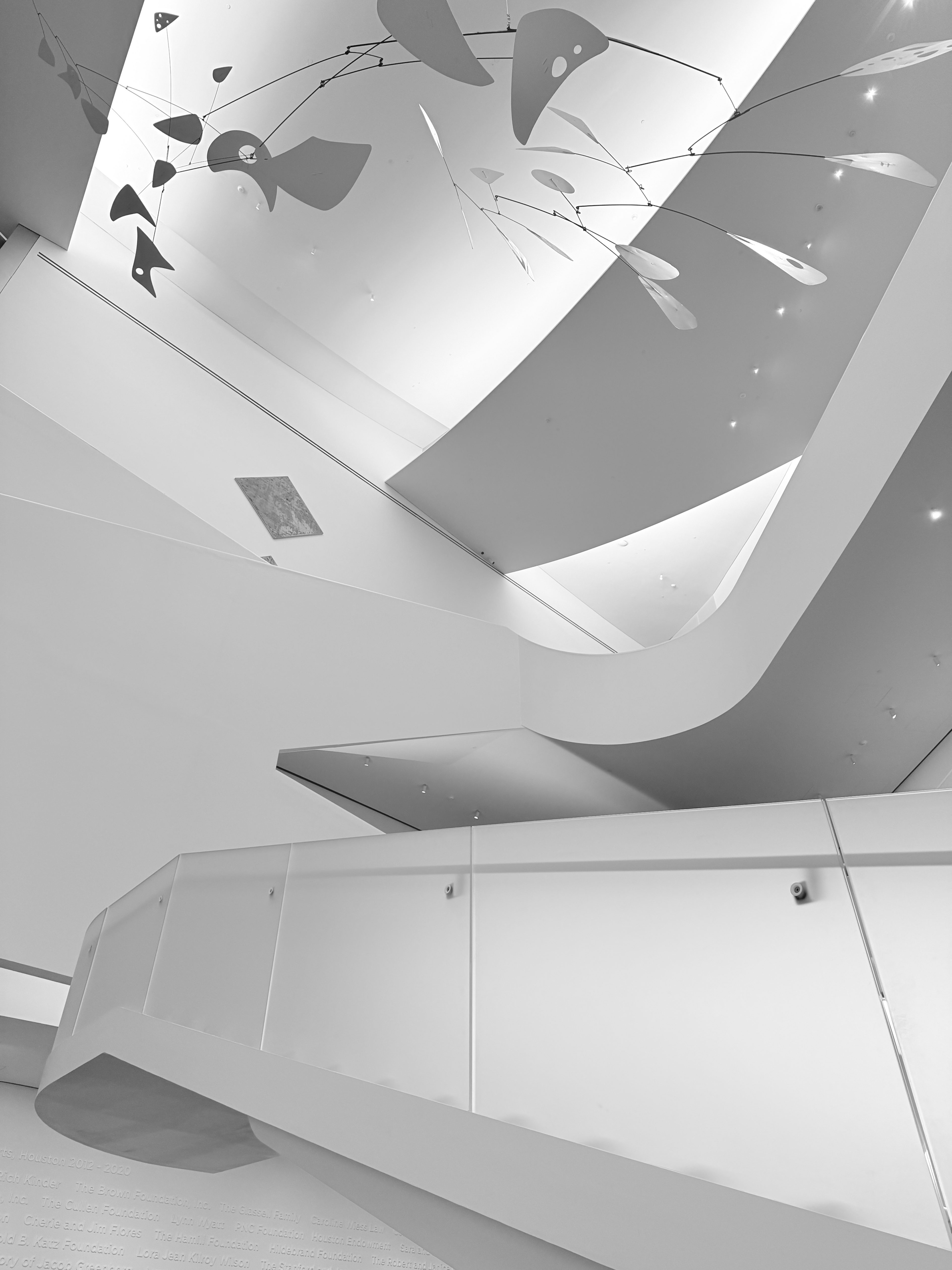
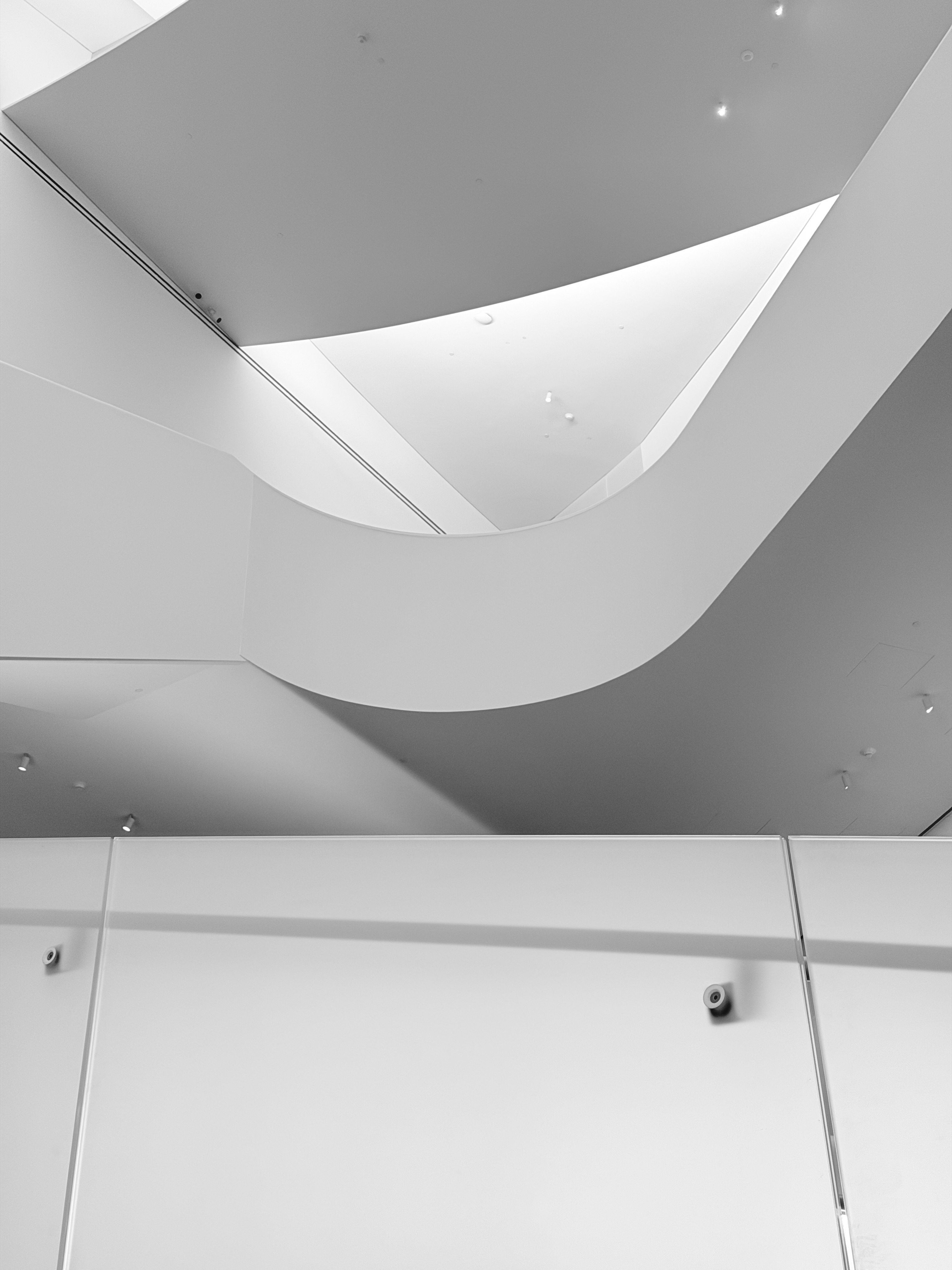
Steven Holl conceived the building as a composition of concave and convex forms. The tubes are not decorative — they are the structure, the enclosure, and the source of light simultaneously. Each tube houses a run of gallery space, and the curvature of the walls creates interiors that are never quite the same from one end to the other. The light shifts. The proportions breathe.
The tubes are clad in translucent glass panels over a concrete structure. Daylight passes through the glass and diffuses across the interior surfaces, producing a quality of illumination that is even and soft but never flat. The light has depth.
The Garden
Between the tubes, the ground level opens into a landscaped garden designed by Günther Vogt. The garden flows through and around the building, blurring the threshold between inside and outside. Trees grow up between the glass volumes. Paths meander. The building does not sit on the land — it shares it.
I think of architecture as an instrument of light — not a container for it, but a way of playing it.
From inside the galleries, the garden is visible through the gaps between tubes, and the green of the planting registers against the white of the walls as a constant, shifting backdrop.
The Light
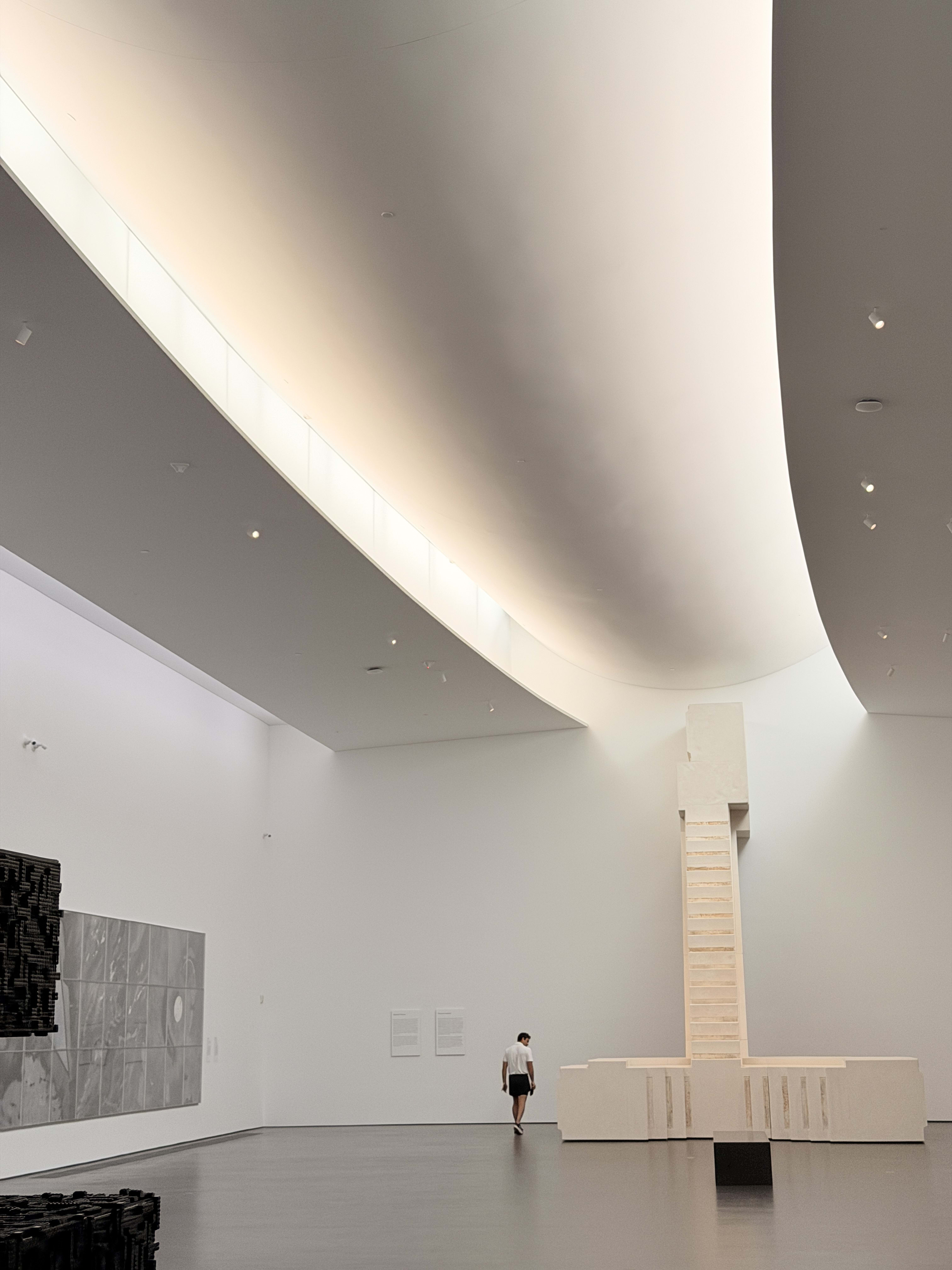
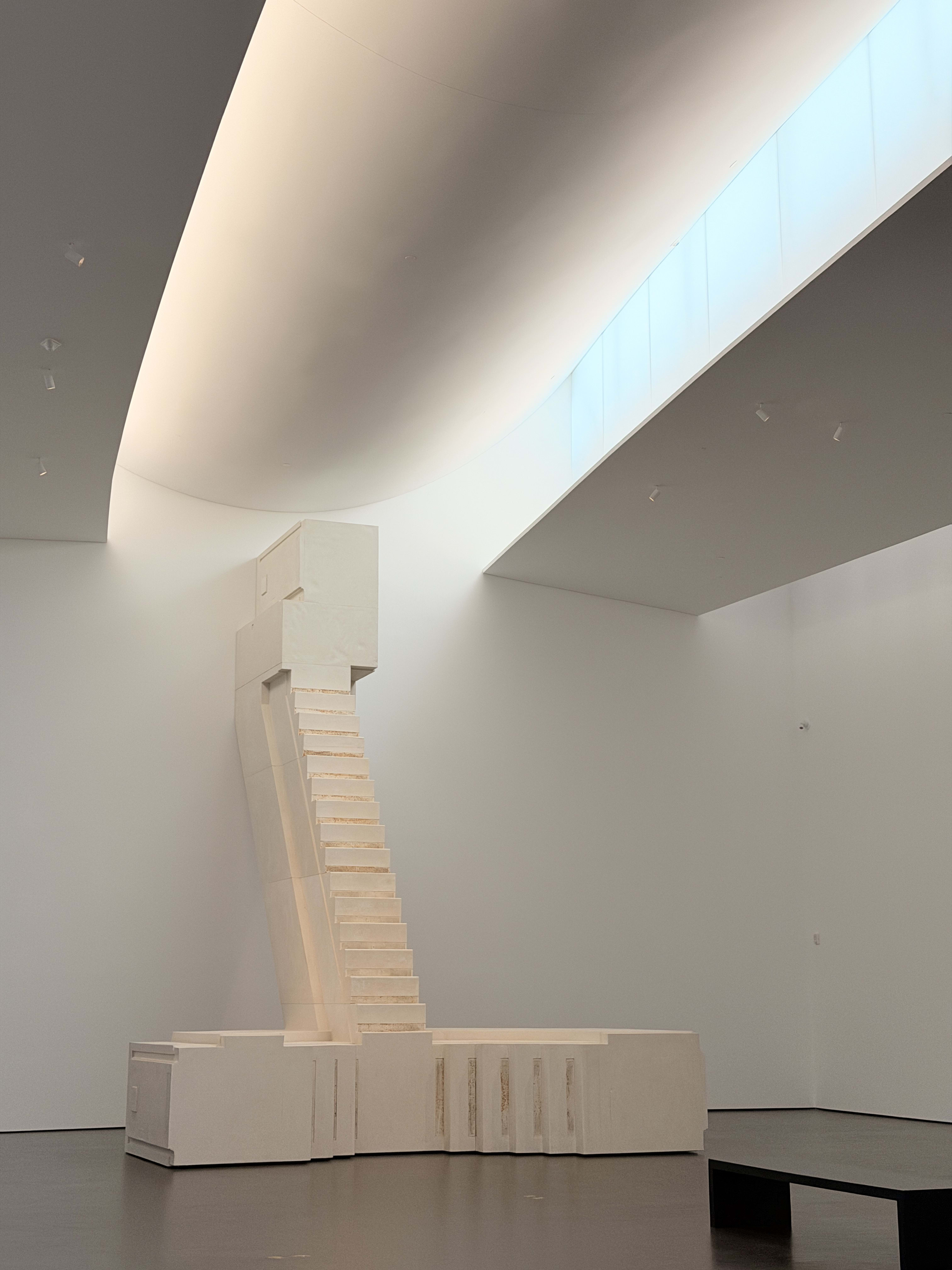
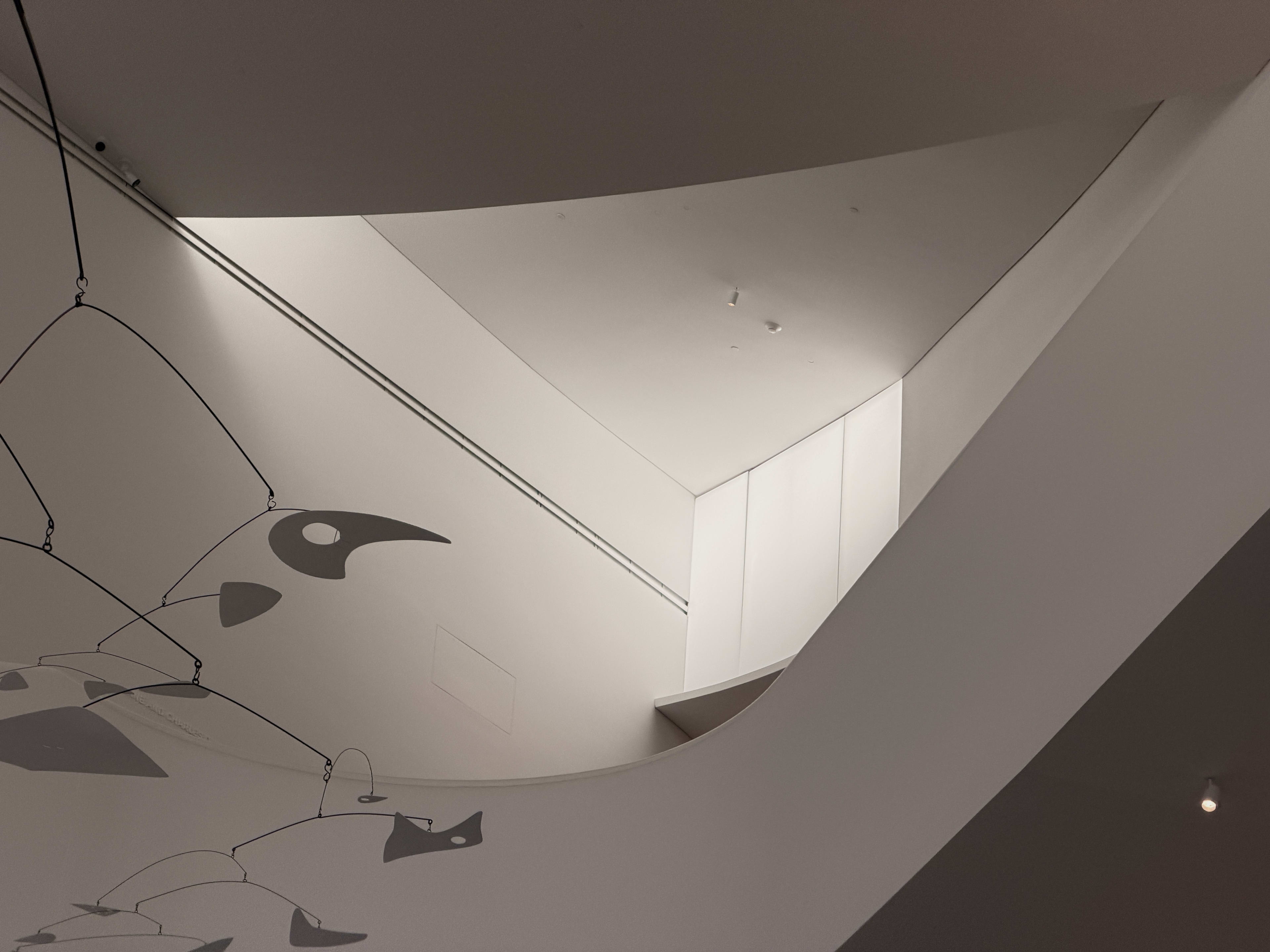
Light is the subject of this building. Holl has spent decades studying how light enters and transforms interior space, and the Kinder Building is the fullest expression of that obsession. The translucent envelope performs differently depending on the hour and the weather. On an overcast day the building absorbs and softens. Under direct sun it radiates. At night, lit from within, the tubes glow against the Houston skyline.
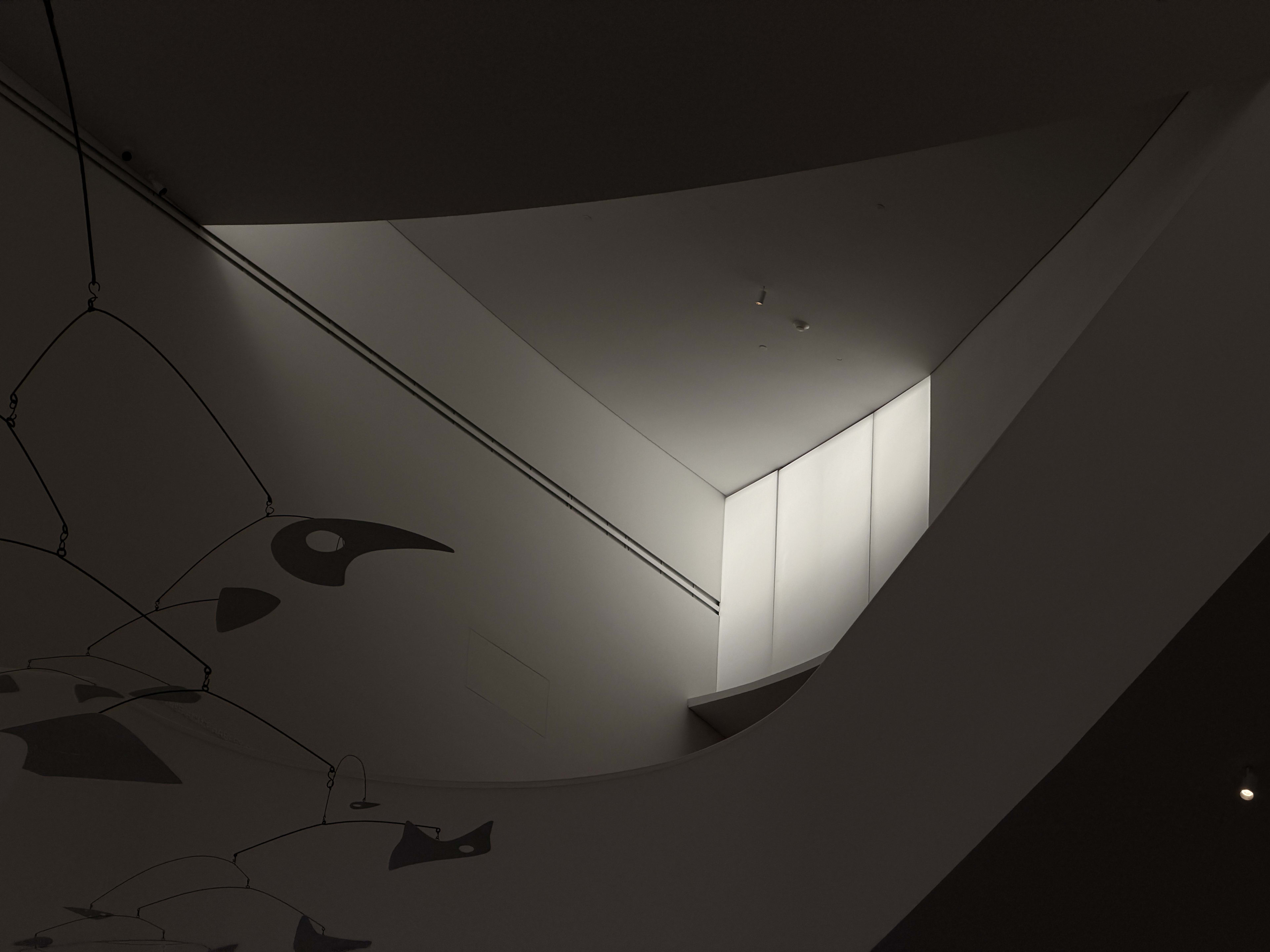
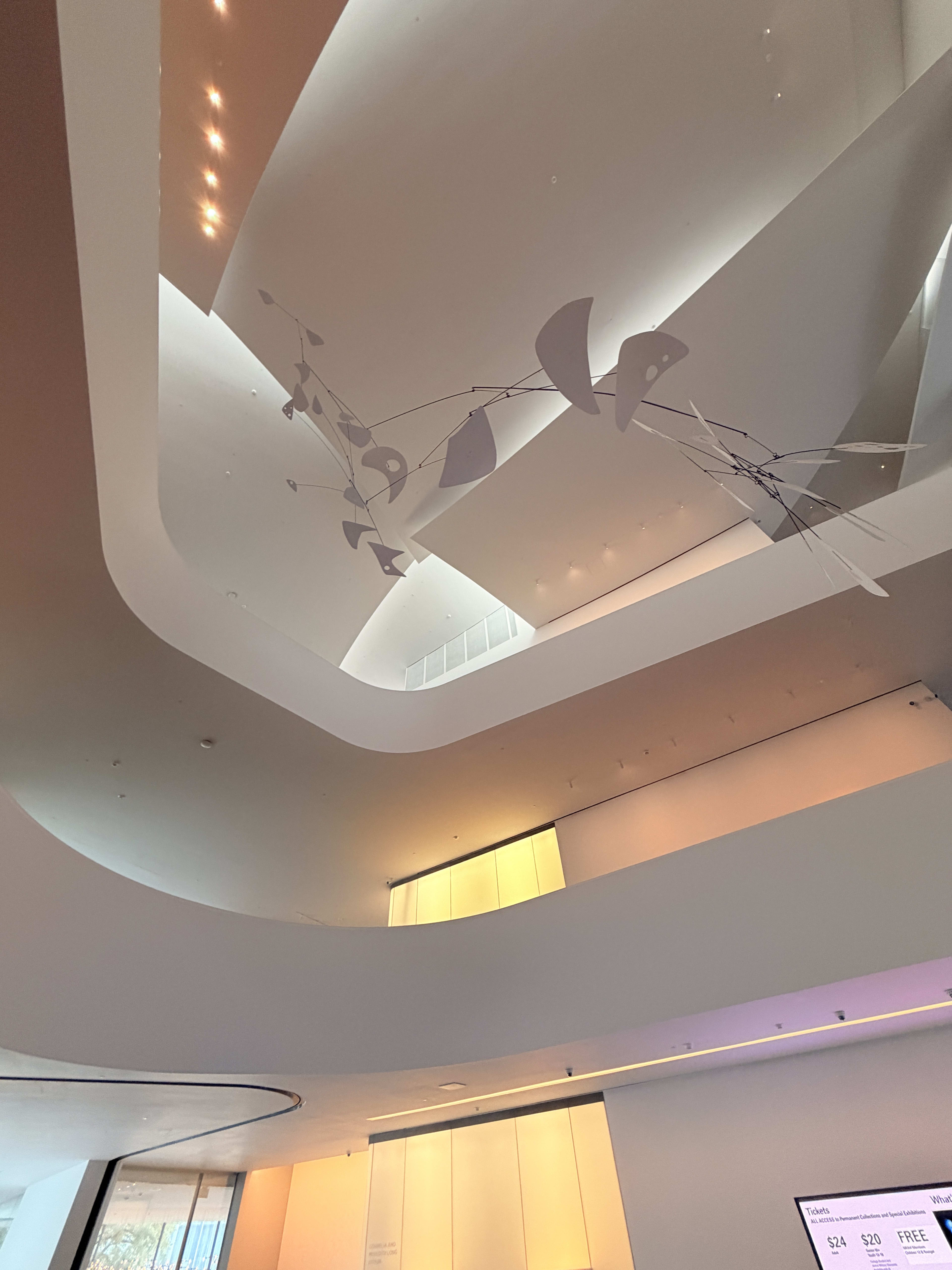
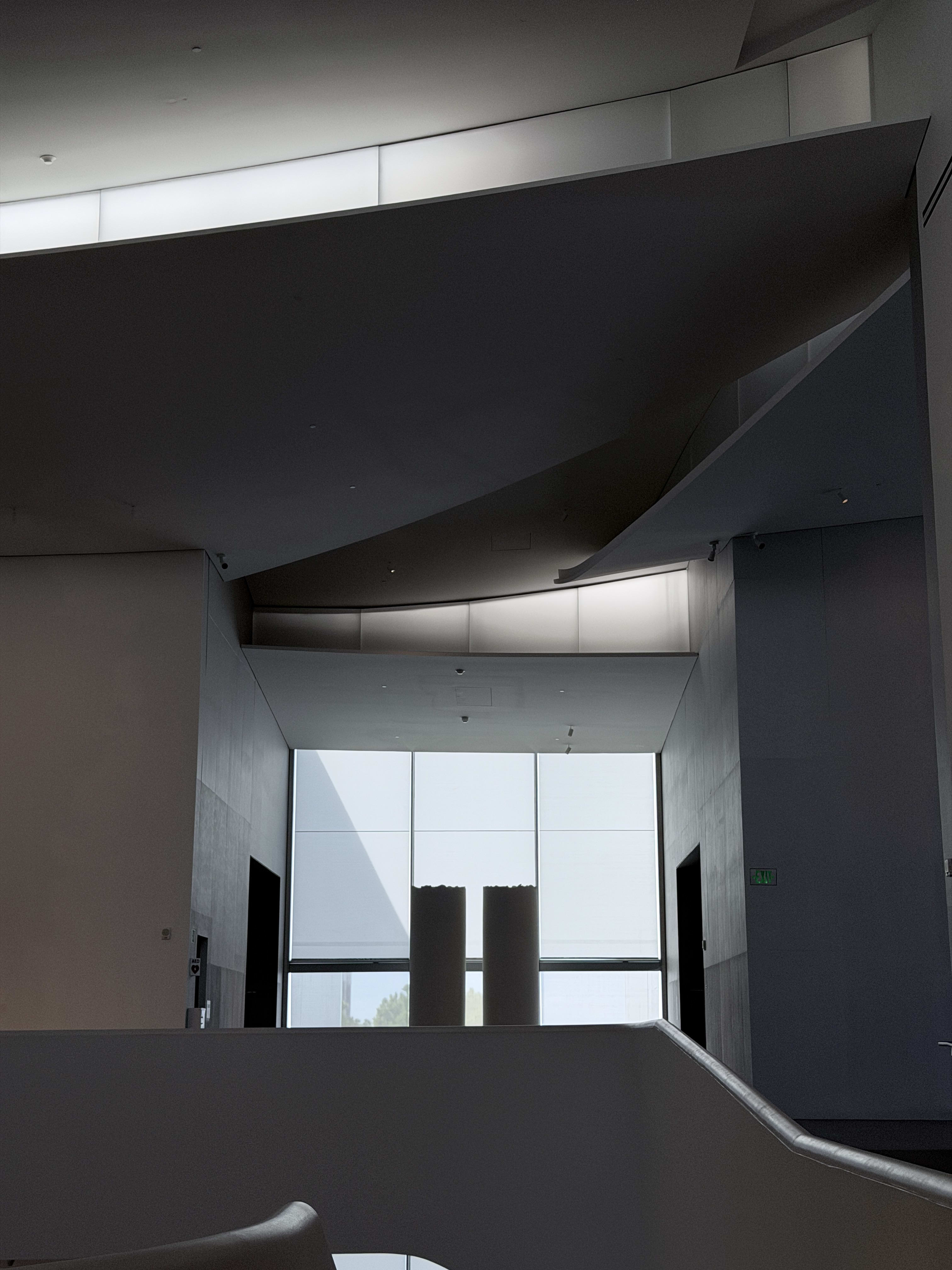
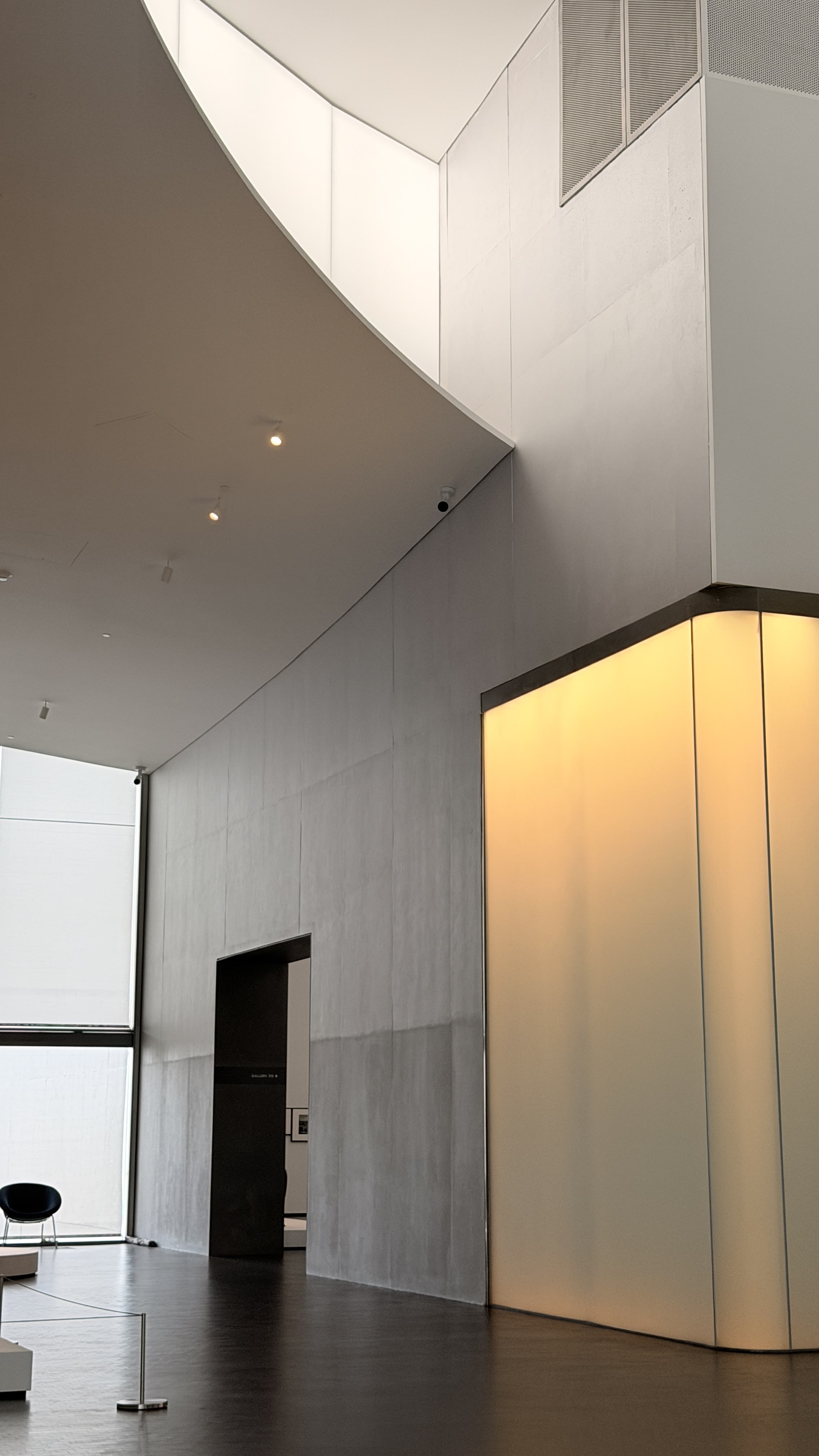
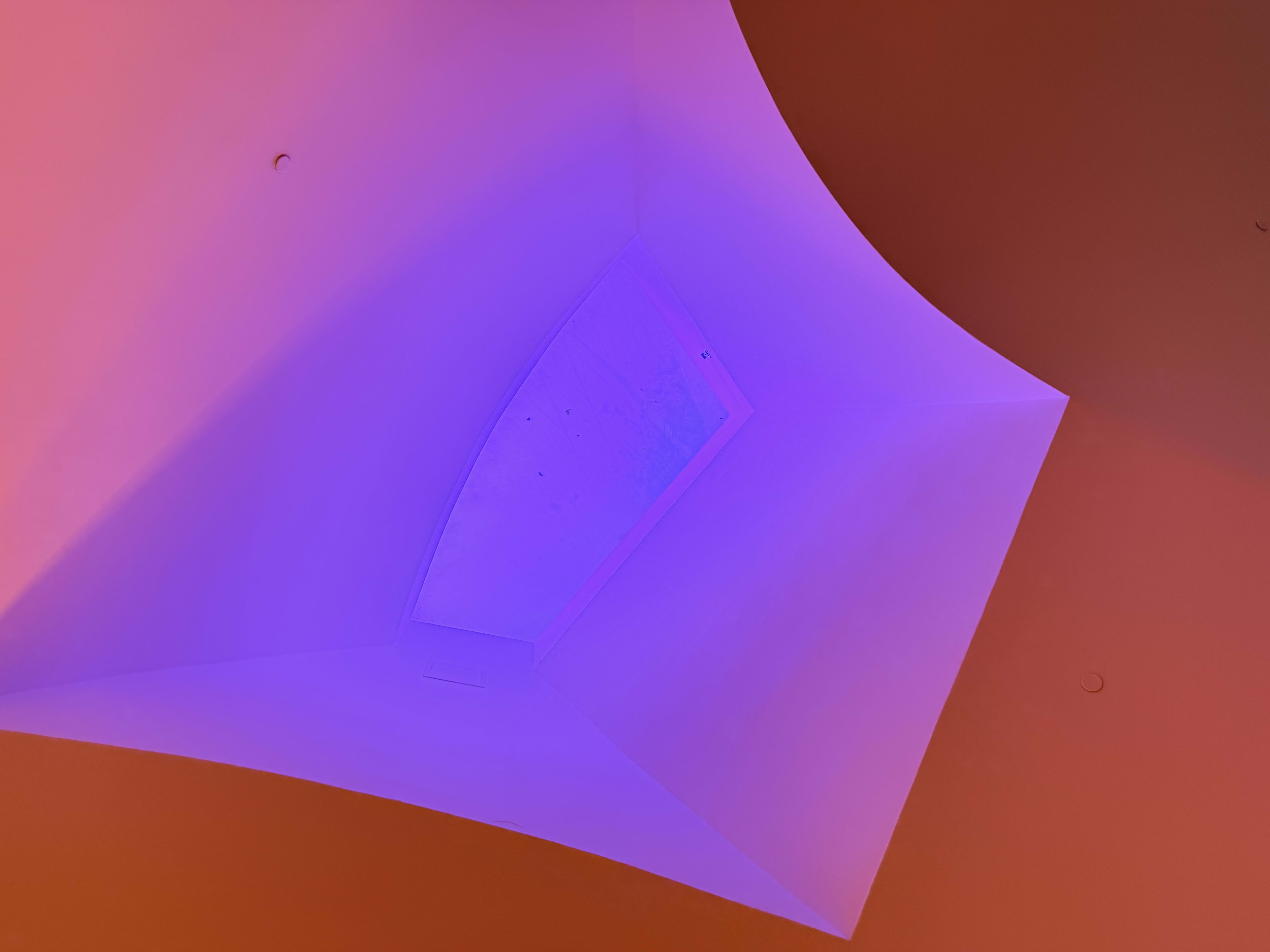
The interior ceilings are shaped to reflect and redirect the daylight that penetrates the glass skin. The result is gallery light that feels natural without the glare or heat that natural light usually brings in Texas.
Underground
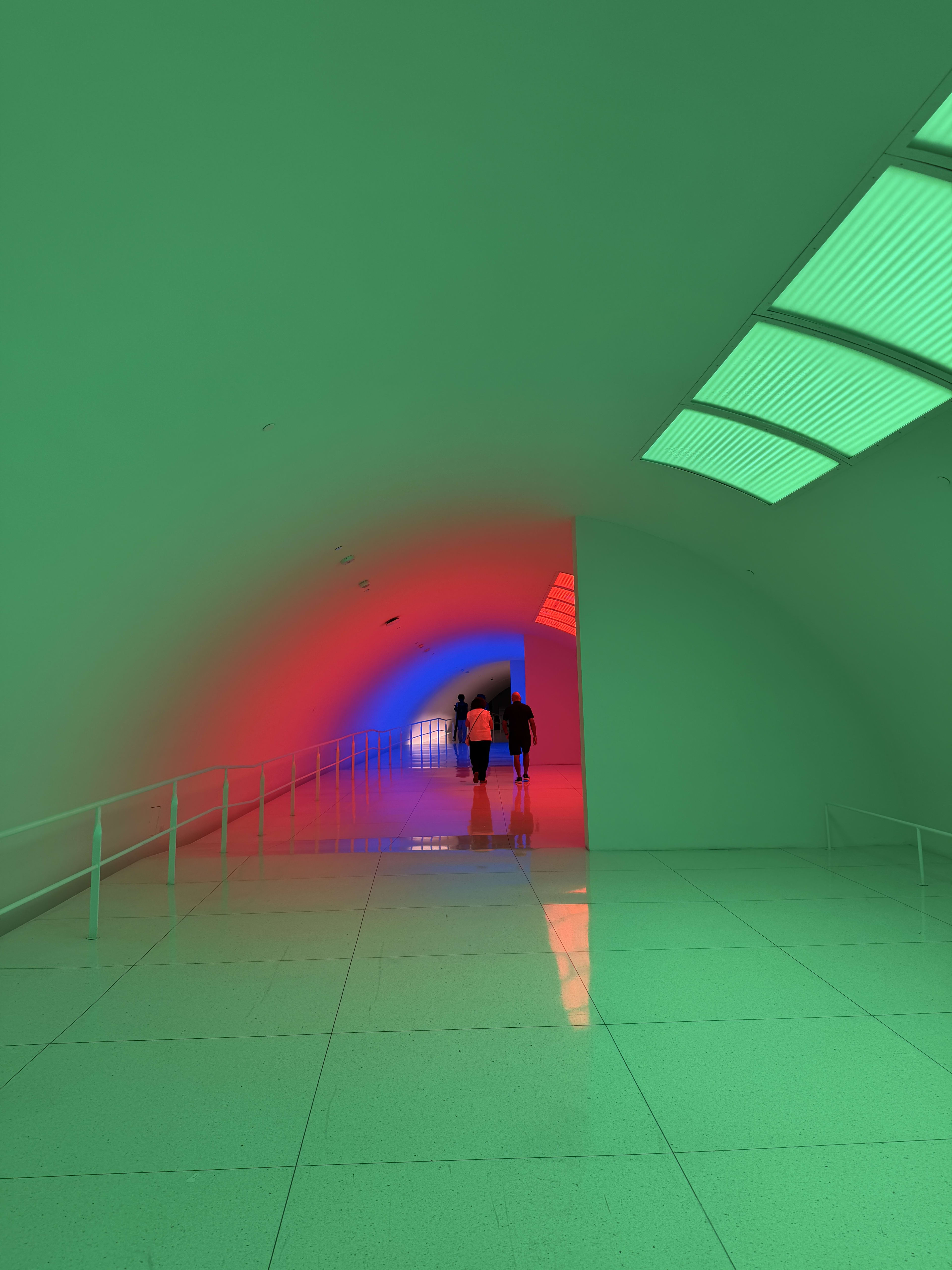
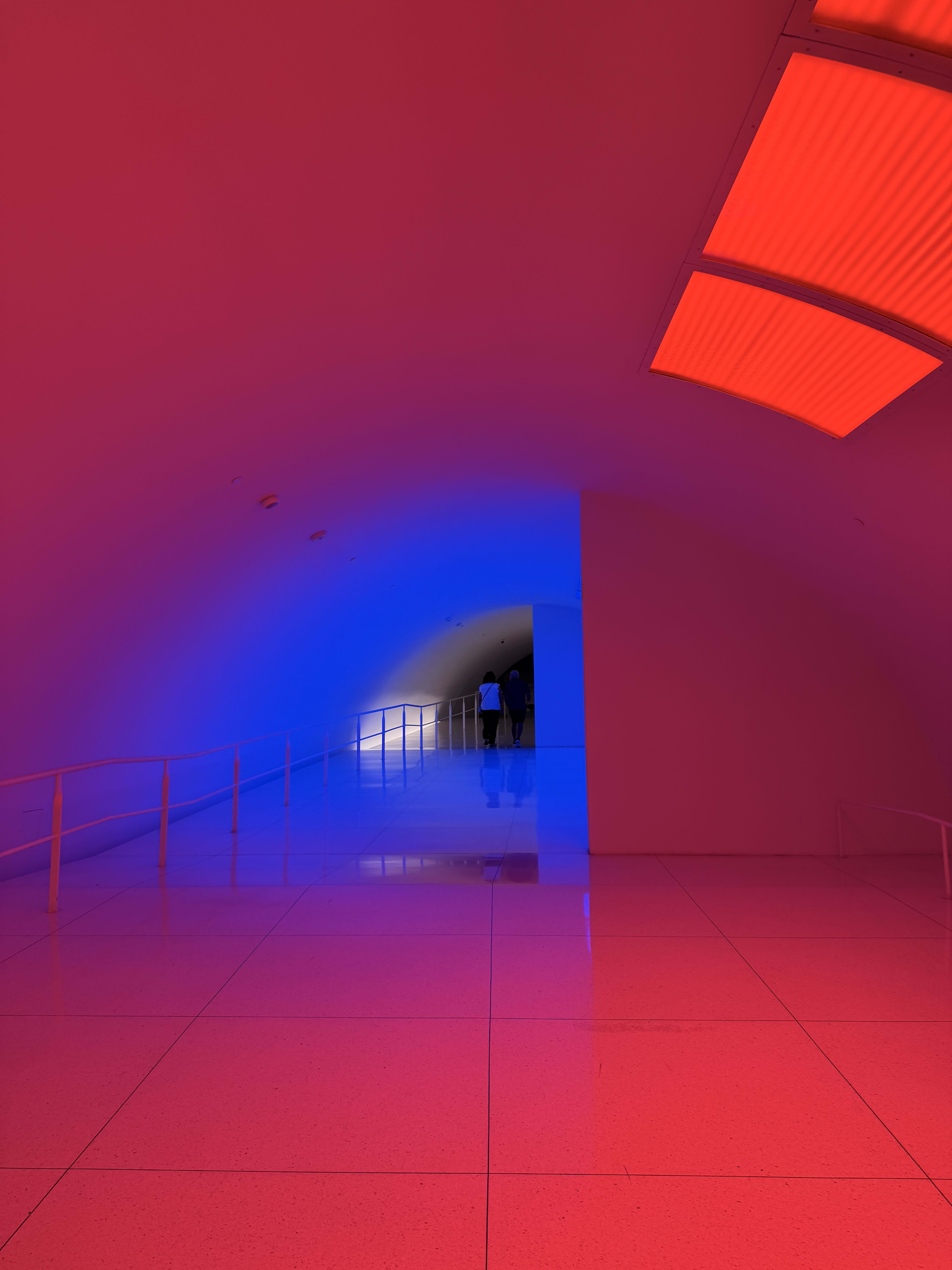
Like Moneo's Beck Building across the campus, the Kinder Building connects to the rest of MFAH through a subterranean passage. The tunnel doubles as gallery space, linking the old and new campuses beneath the street. The transition from Holl's luminous interiors to the underground passage and then up into the other buildings gives you a sense of the museum as a single organism spread across multiple city blocks.
Porosity
The Kinder Building's most radical quality is its porosity. The ground level is open, permeable, continuous with the surrounding neighborhood. You can walk through the building without entering a gallery. The architecture does not hoard its public space behind a ticket desk — it offers it freely, trusting that proximity to art will do its own work.
—gallery