Schindler House
2 min read
The Schindler House does not look like 1922. It looks like an idea that architecture is still catching up to — a house where walls slide open, where sleeping happens on rooftop porches under canvas, where concrete meets garden without apology.
The Slab
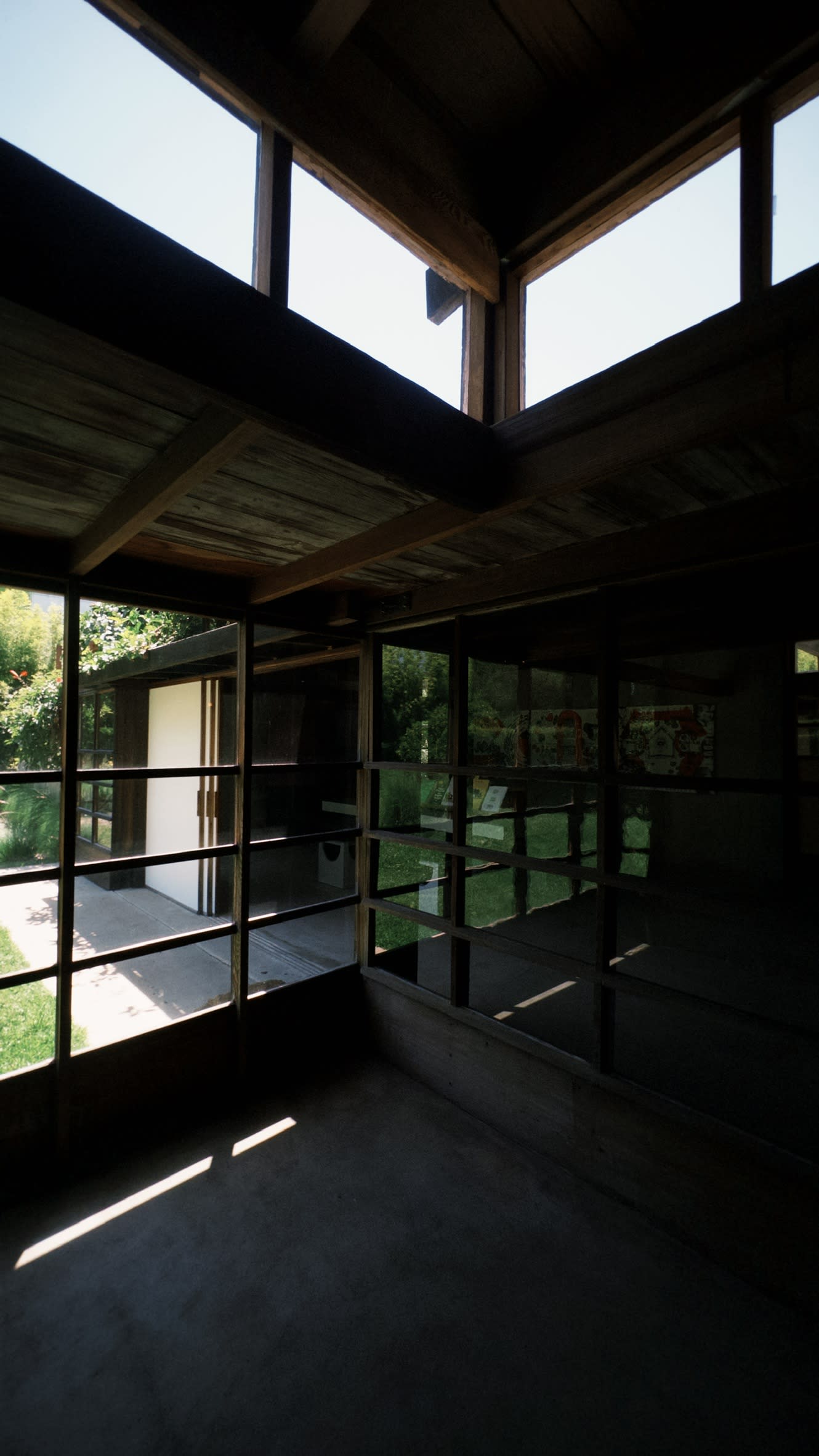
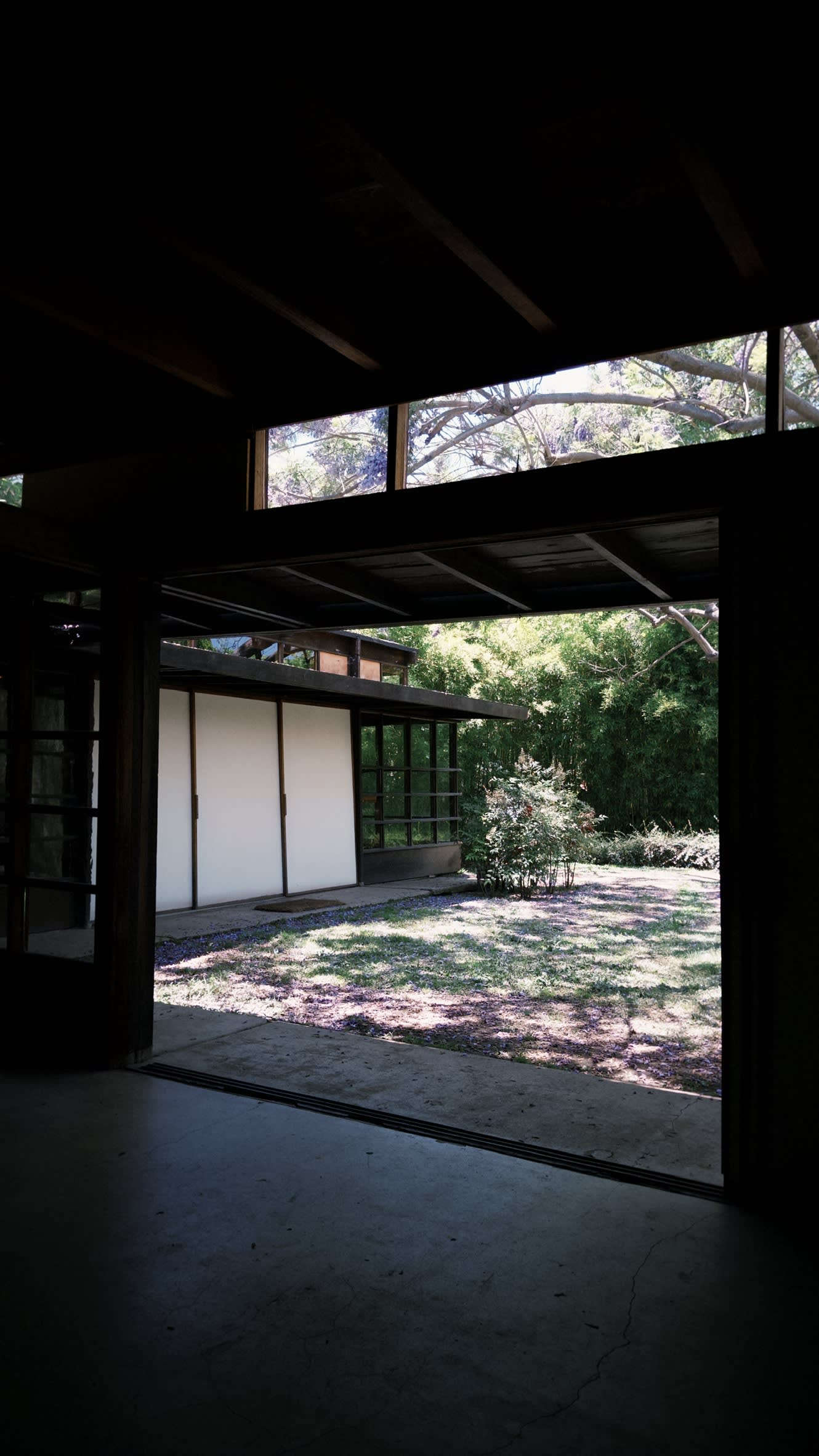
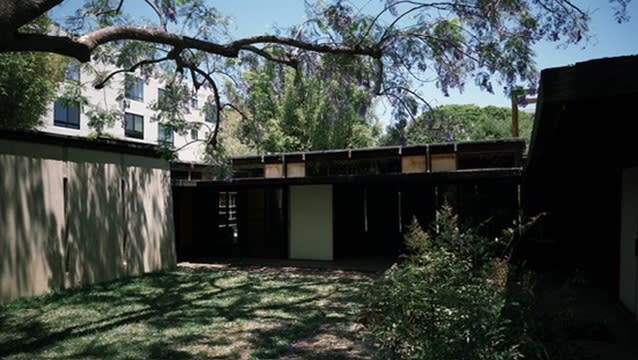
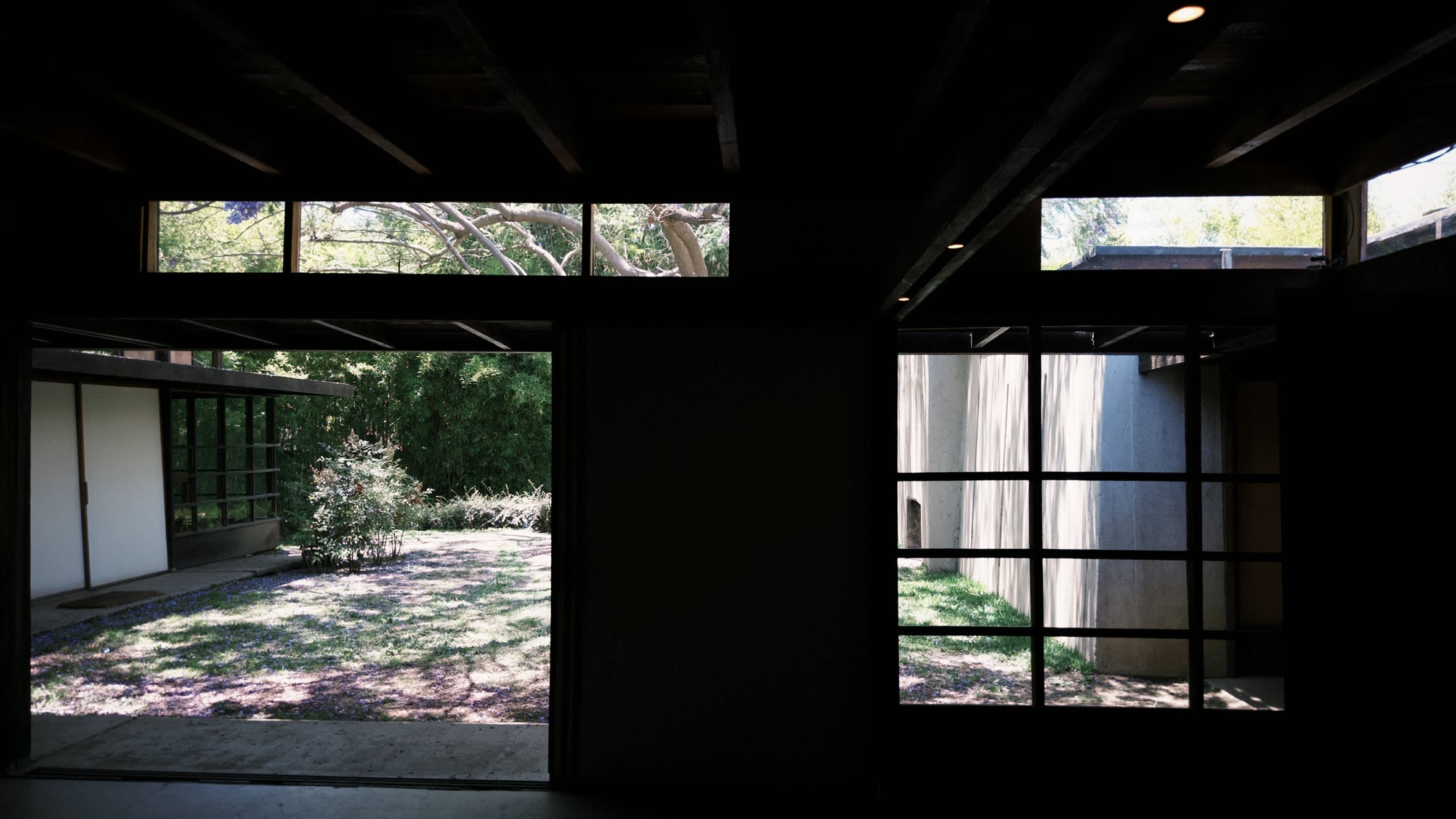
Rudolph Schindler poured the house himself. Tilt-up concrete panels — a technique he adapted from Irving Gill — form the walls. The panels are thin, just three inches, and they stop short of the ceiling. Clerestory windows fill the gap, letting light in from above while the walls below provide privacy.
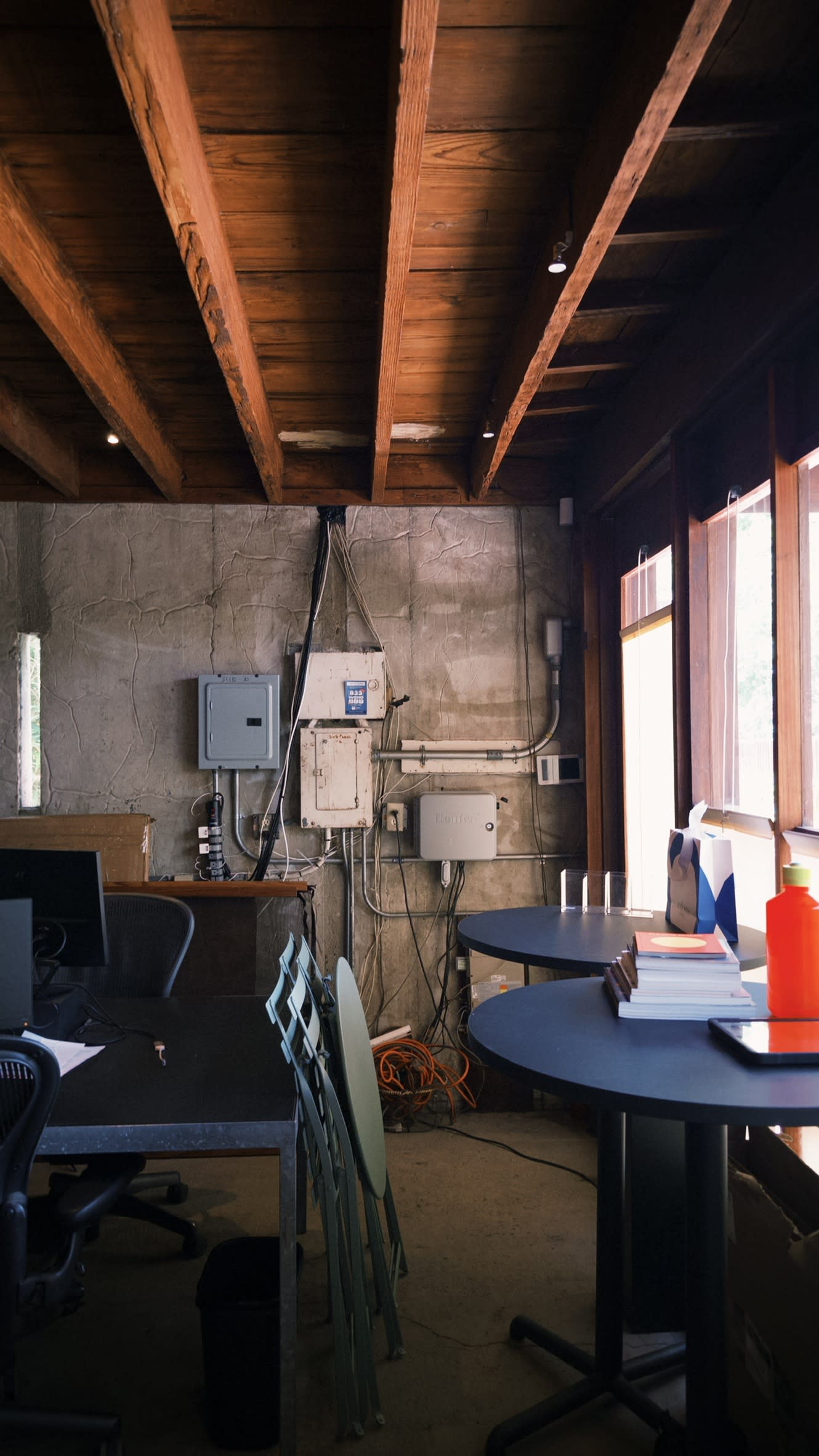
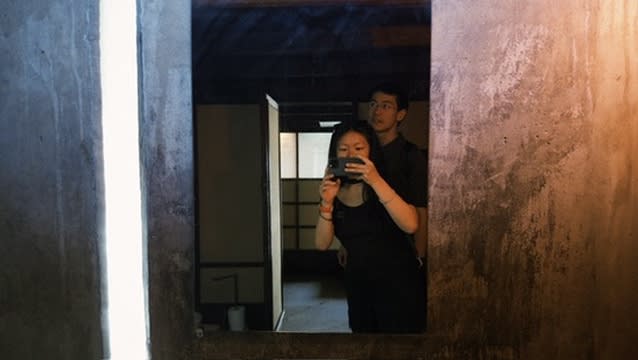
The concrete is rough. Schindler did not sand it or finish it. The board marks of the formwork are visible, and the surface has weathered over a century into something that looks more like stone than manufactured material.
Indoor-Outdoor
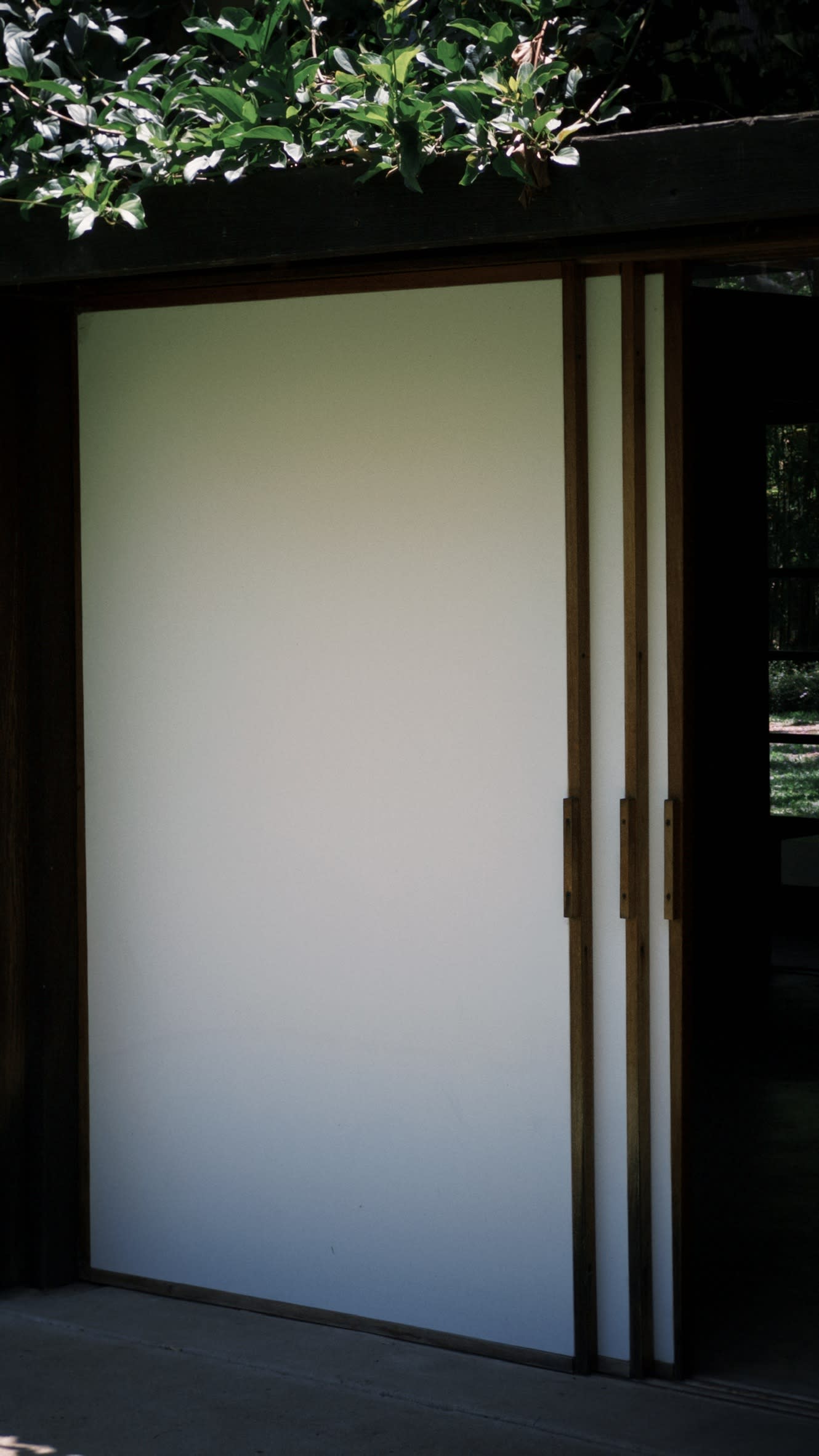
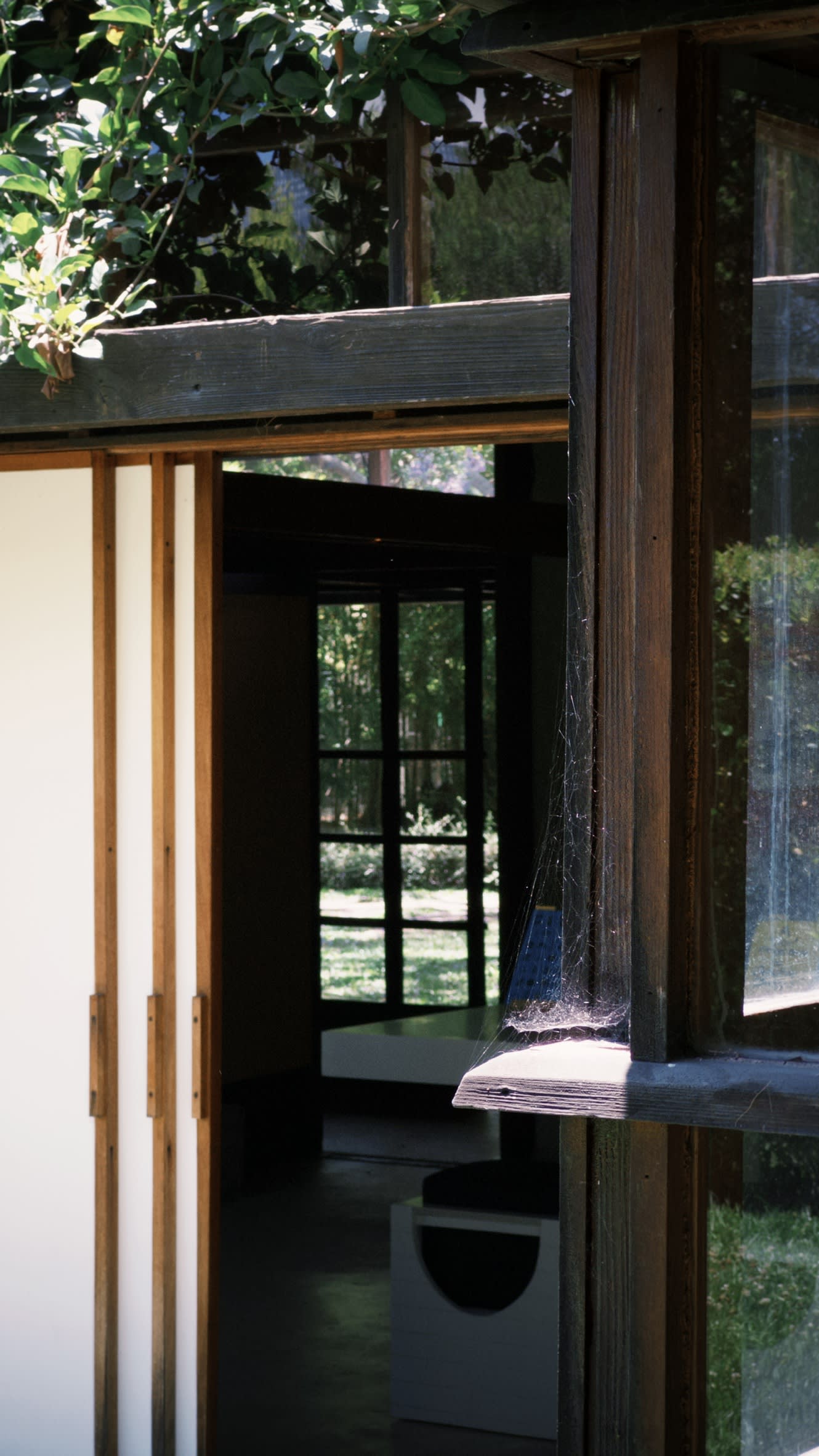
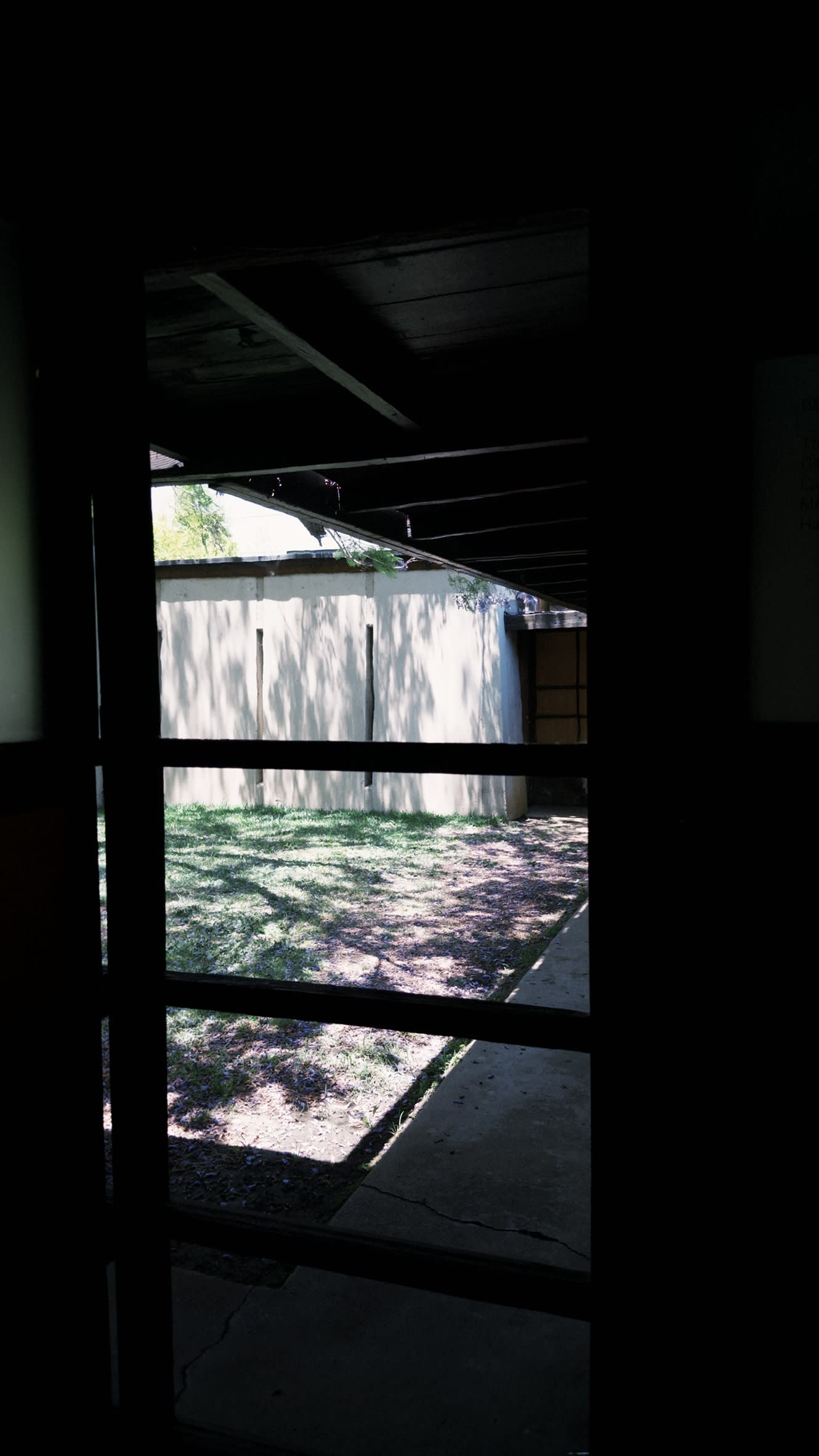
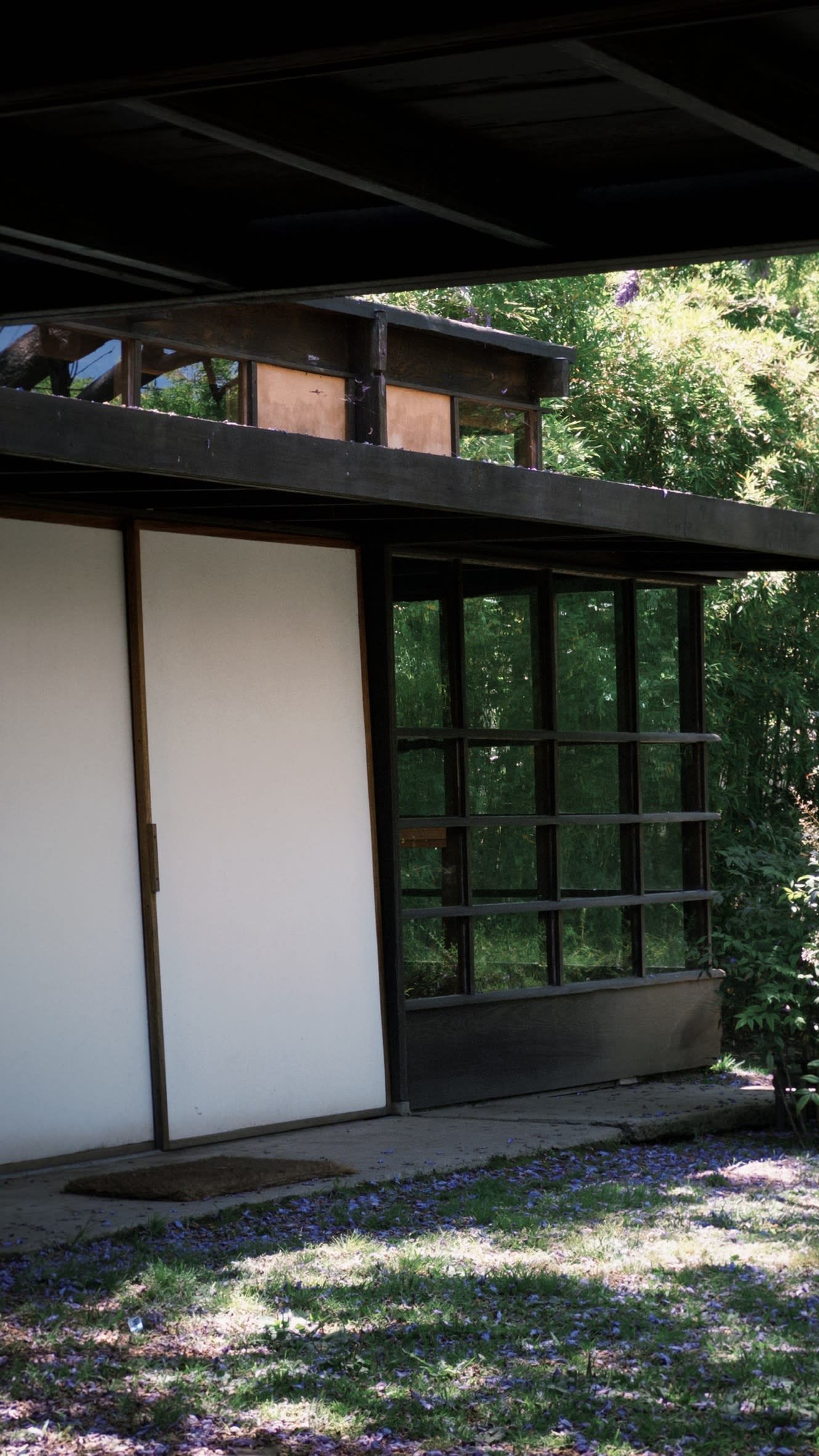
Each of the house's four studios opens onto its own private garden through full-height sliding panels. When the panels are open — which in Southern California is most of the year — the rooms extend outward. The garden is the living room. The house is merely its edge.
A house should not be a shelter against nature. It should be a frame for living within it.
Schindler designed the house for two couples — himself and his wife, and their friends the Chaces. Each couple had a studio for work and a shared kitchen. The sleeping porches on the roof, open to the sky under canvas canopies, were the bedrooms.
The MAK Center
Today the house operates as the MAK Center for Art and Architecture, hosting exhibitions and residencies. The spaces are kept close to their original condition — the concrete walls, the redwood framing, the canvas roof panels have been restored rather than replaced.
Walking through, you understand that Schindler was not designing a house. He was designing a way of living — one where the distinction between architecture and landscape, between shelter and exposure, between private and shared, was deliberately blurred.
Material Honesty
The palette is austere: concrete, redwood, glass, canvas. Nothing is hidden. The structure is the surface. The joints are visible. The electrical conduit runs exposed along the walls. This is not minimalism as style — it is minimalism as ethics, a refusal to pretend that a building is anything other than what it is made of.
—gallery