Seattle Central Library
2 min read
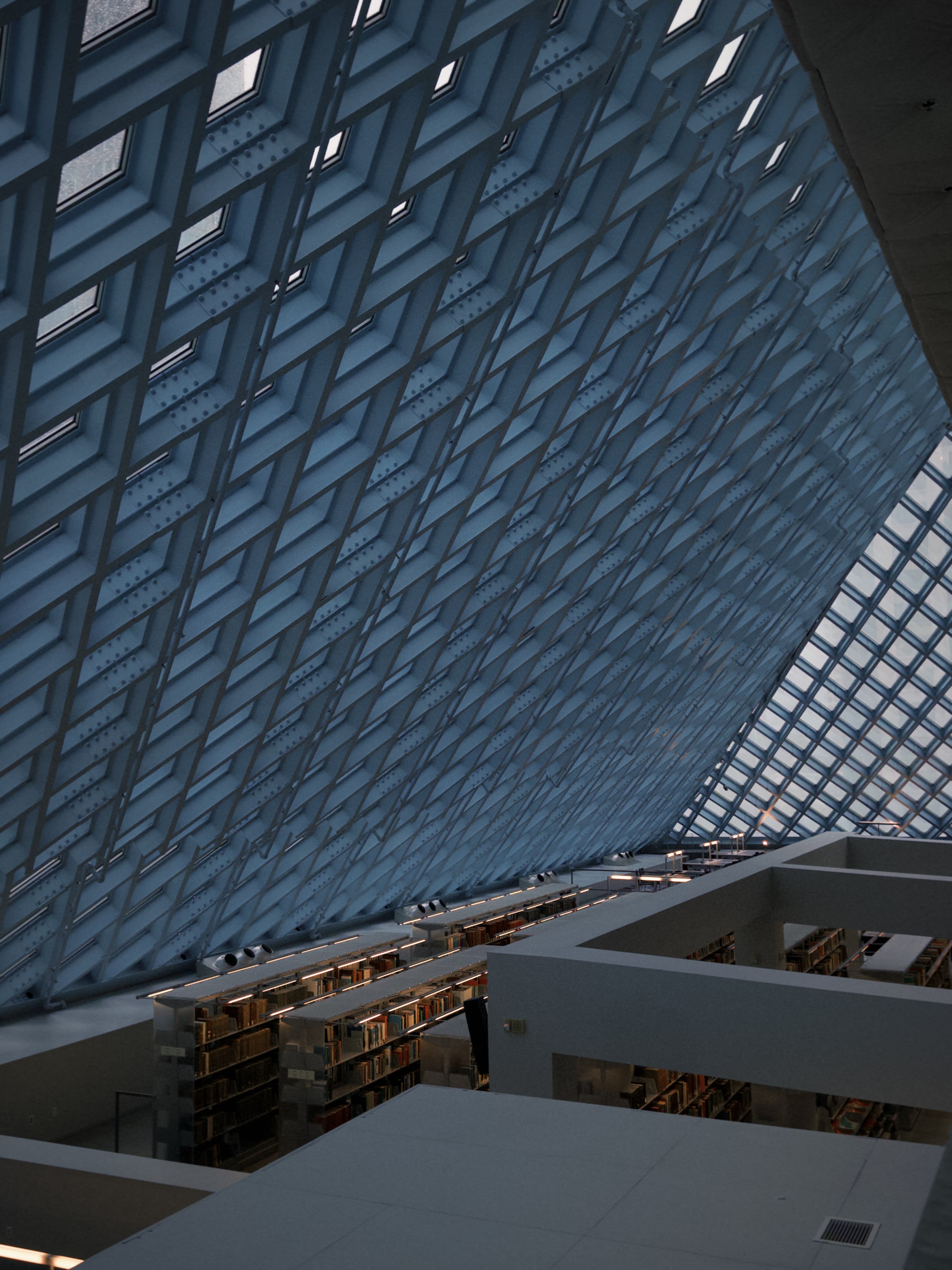
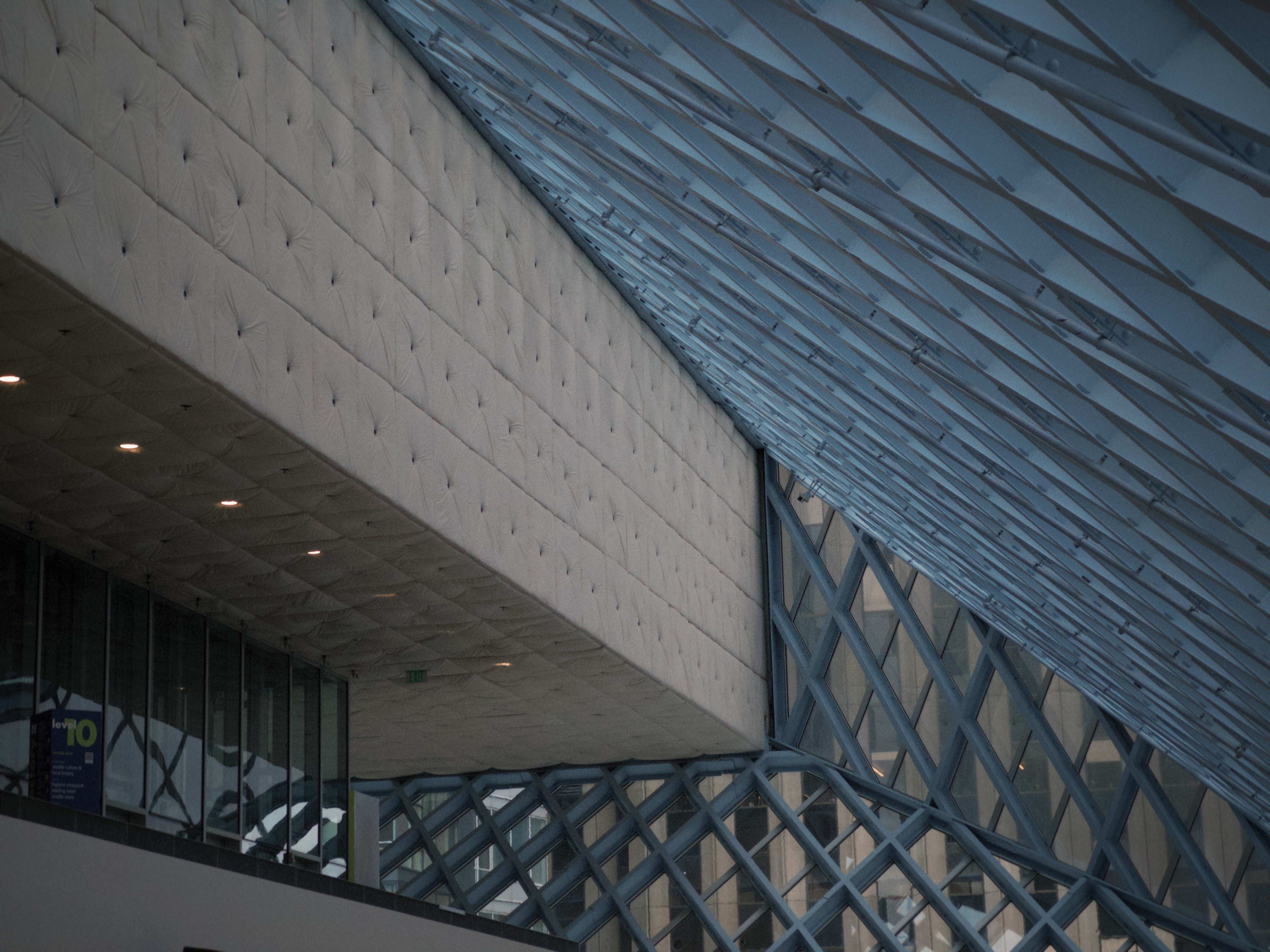
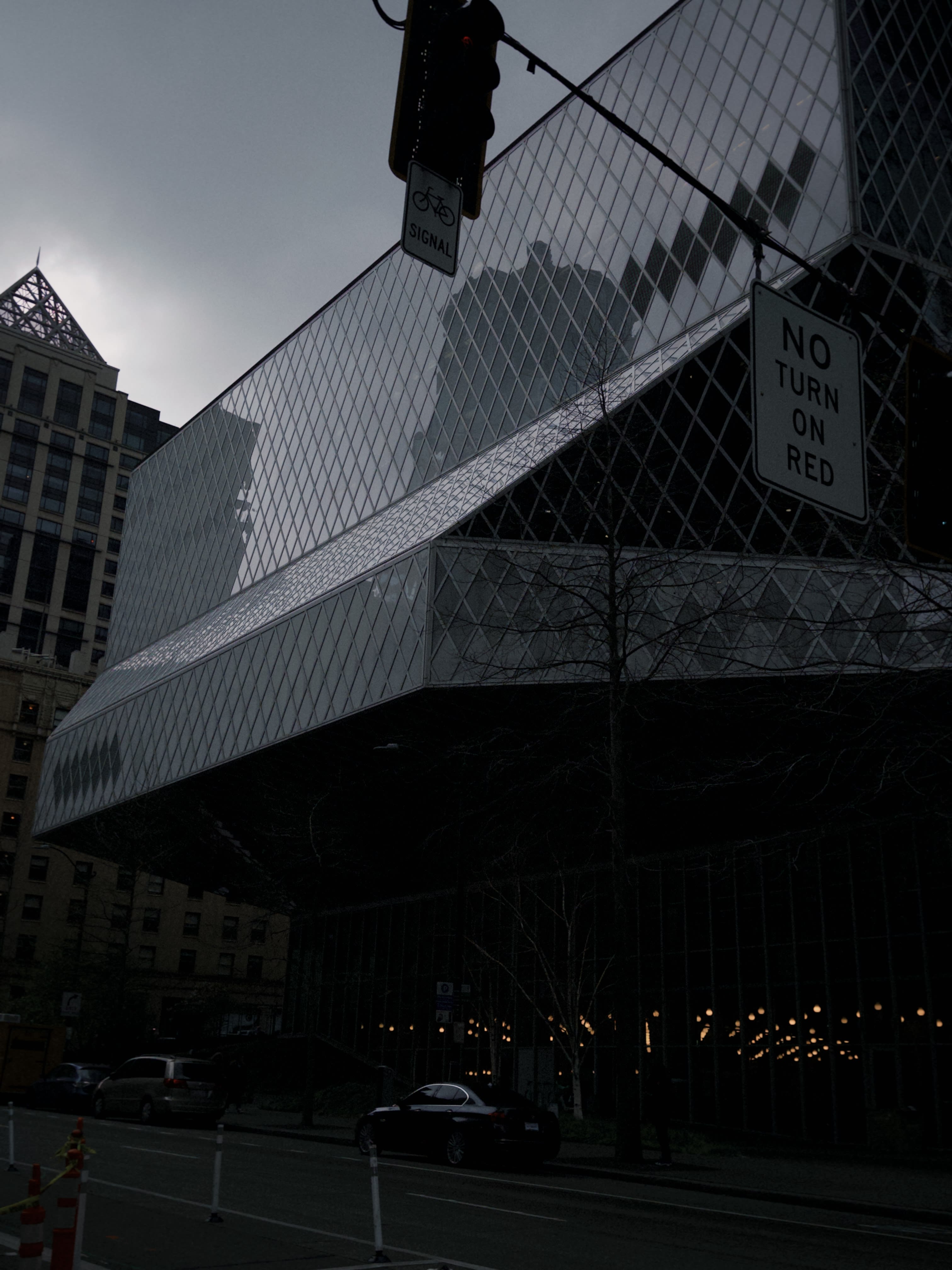
The Seattle Central Library does not look like a library. It looks like a faceted crystal dropped into the city grid, its diamond-patterned glass skin reflecting sky and street in fragments.
The Book Spiral
The building's most radical gesture is the Book Spiral — a continuous ramp that winds through four floors of non-fiction, organized by Dewey Decimal number without interruption. You enter at 000 and walk upward through the entire collection. No stairs, no breaks, no floor changes. The books flow like a single unbroken sentence.
This is not a metaphor. It is an engineering decision that eliminates the problem libraries have always faced: how to expand a section without displacing its neighbors. The spiral can absorb growth anywhere along its length.
Light and Steel
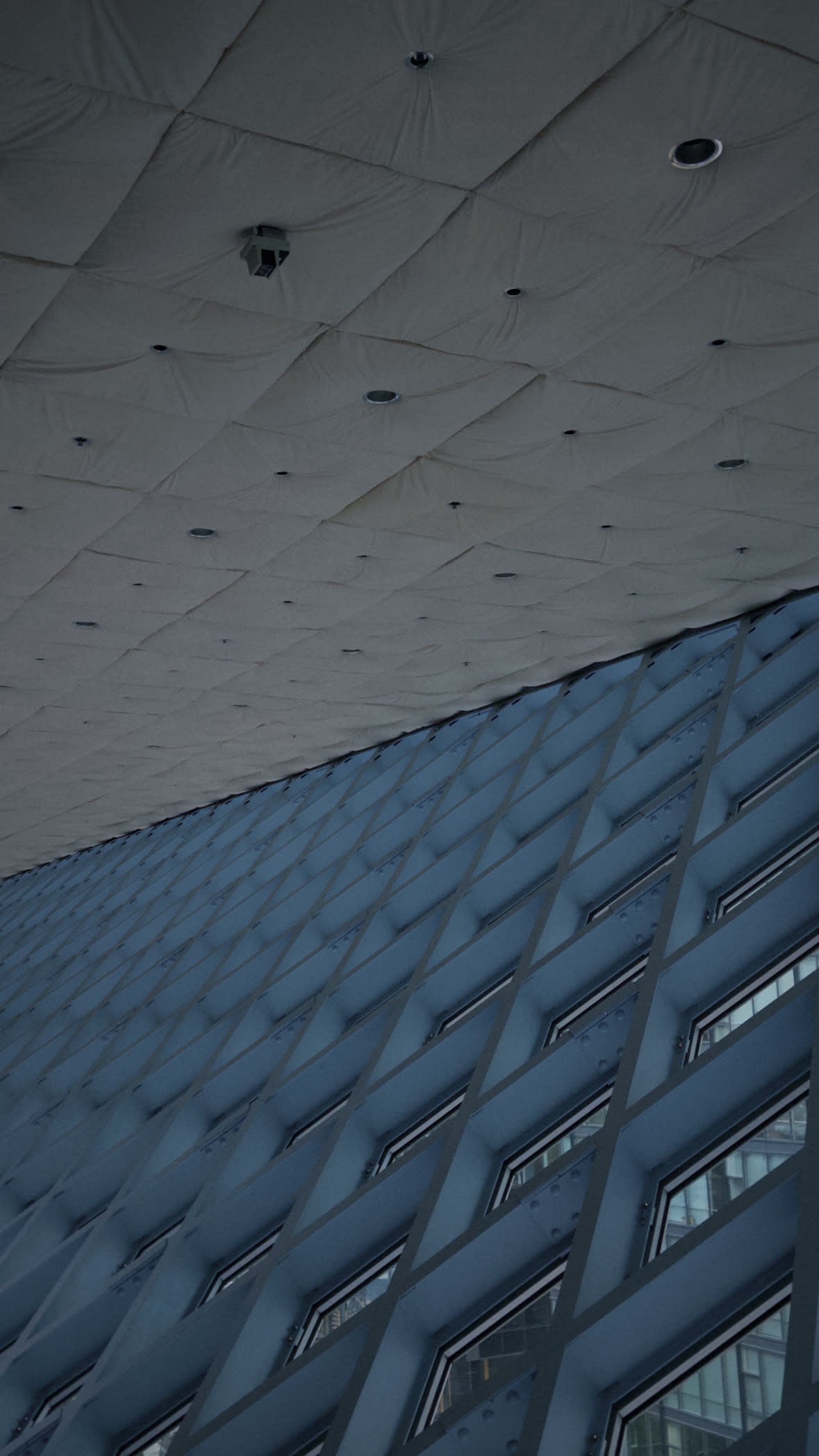
The exterior skin is a diagrid of steel and glass that admits light from every angle. On a grey Seattle afternoon, the interior glows. On a sunny day, diamond-shaped shadows pattern the floors and walls, shifting through the hours like a sundial.
A library should be a place where you get lost — not in confusion, but in possibility.
The mixing chambers — open floors between the programmatic platforms — are flooded with this filtered light. They are neither inside nor outside but something between: urban rooms with weather.
The Living Room
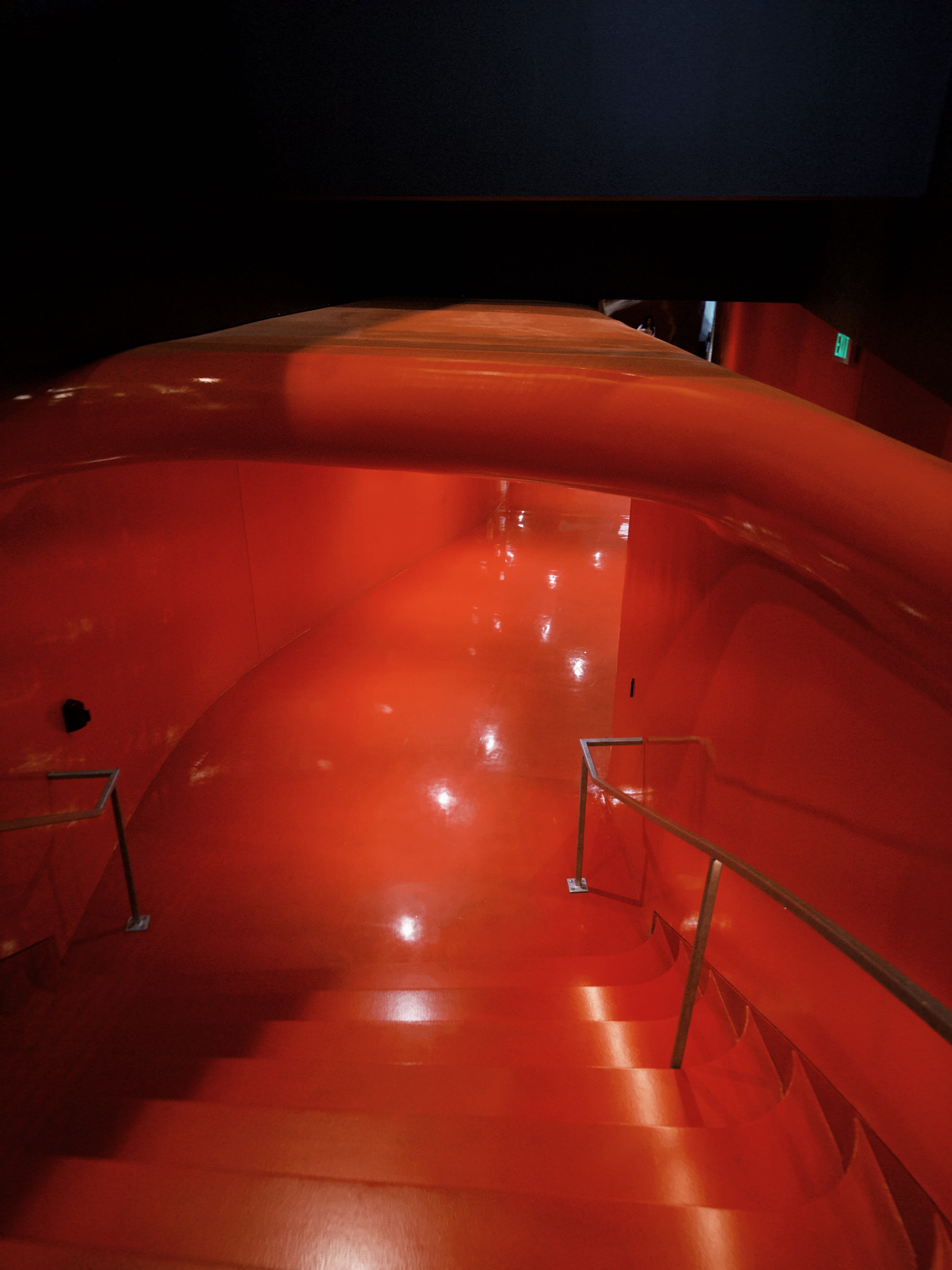
The ground floor operates as an extension of the street. No turnstile, no lobby, no threshold. The city flows in and the building receives it. Homeless residents read beside office workers. Students sprawl on the red escalator landings. The building does not judge its occupants or sort them by purpose.
This is Koolhaas at his most generous — architecture that trusts the public to define the space through use rather than design.
—gallery