TWA Flight Center
2 min read
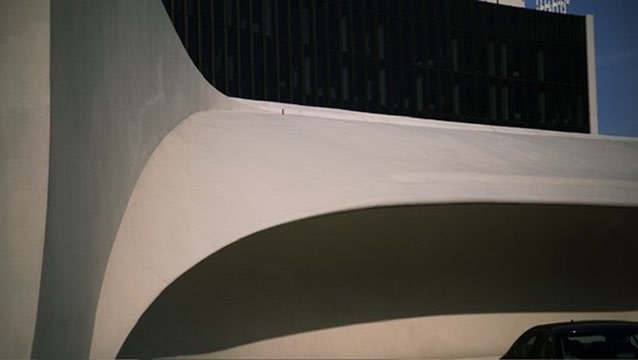
The TWA Flight Center is a building shaped like the feeling of taking off. Eero Saarinen designed it in 1962 as a terminal for Trans World Airlines, and every surface curves upward, as if the concrete itself is lifting.
The Shell
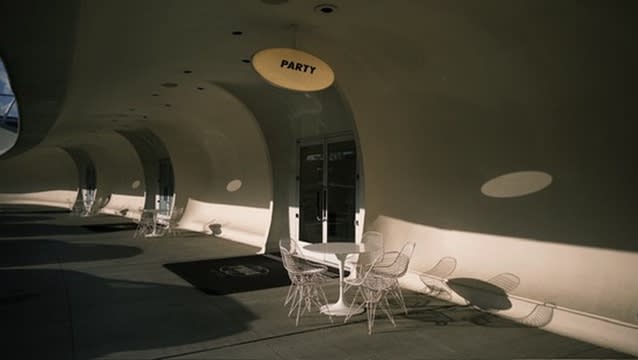
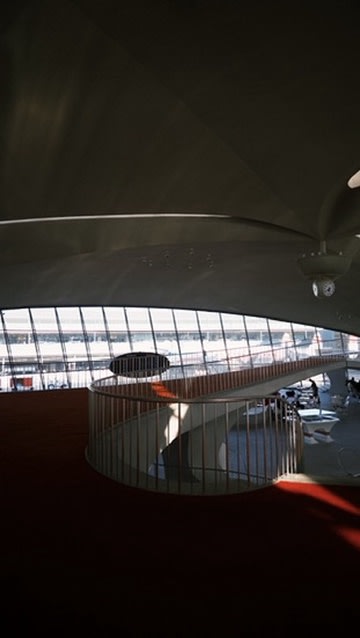
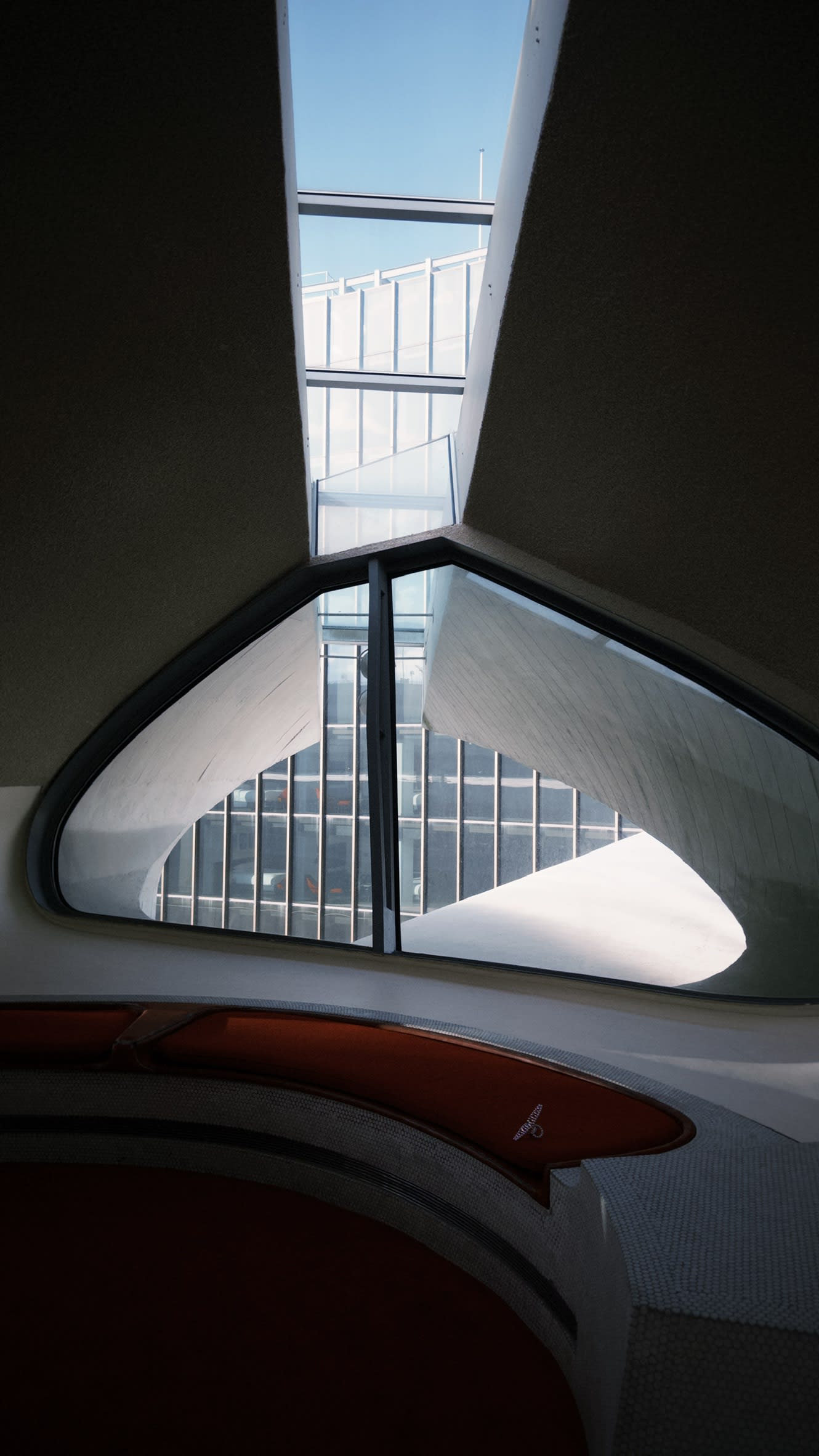
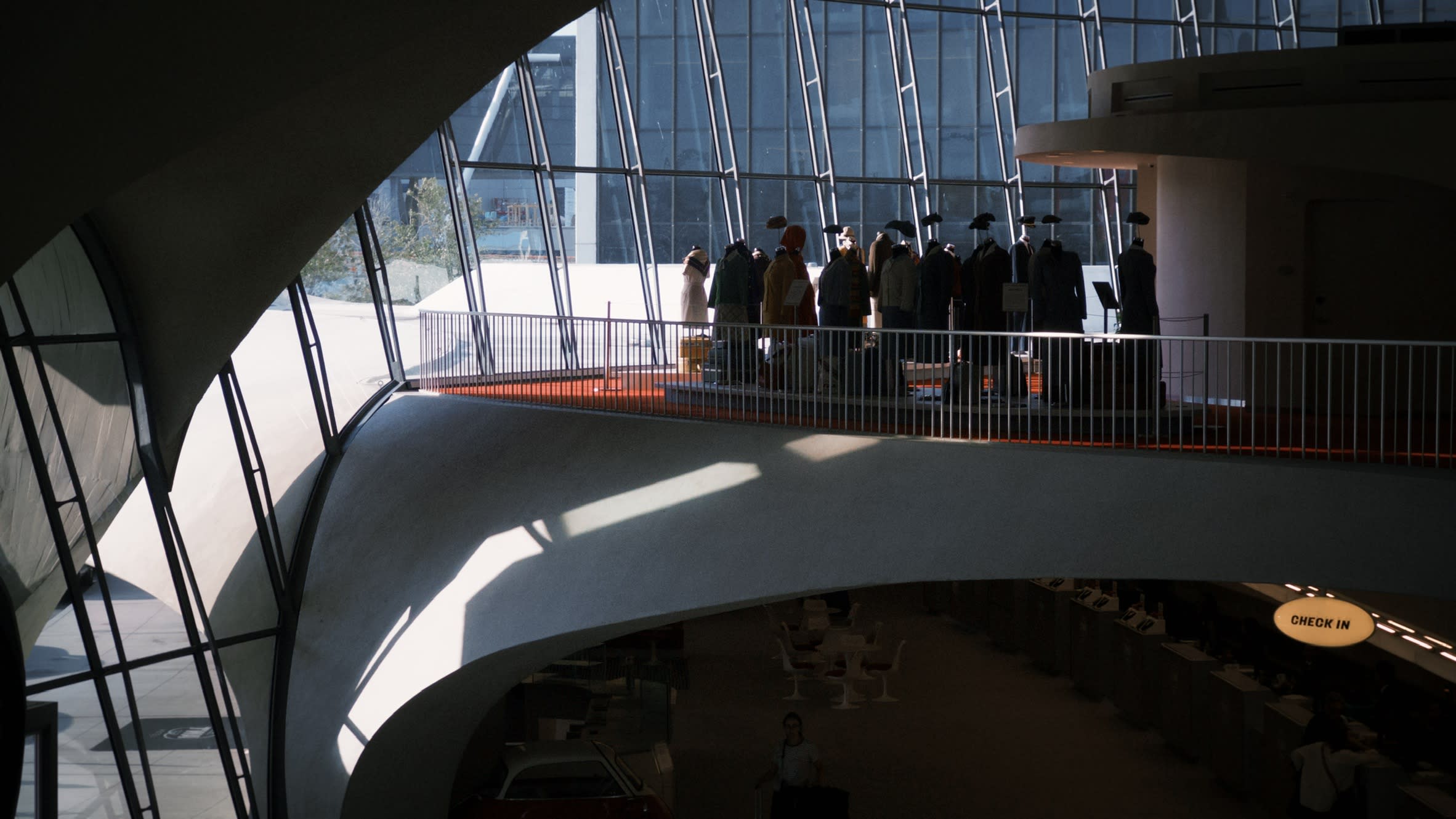
Four intersecting concrete vaults form the roof, meeting at seams that let in thin lines of daylight. The structure is continuous — walls become ceiling become floor in a single gesture. There are no right angles. The building refuses the grid.
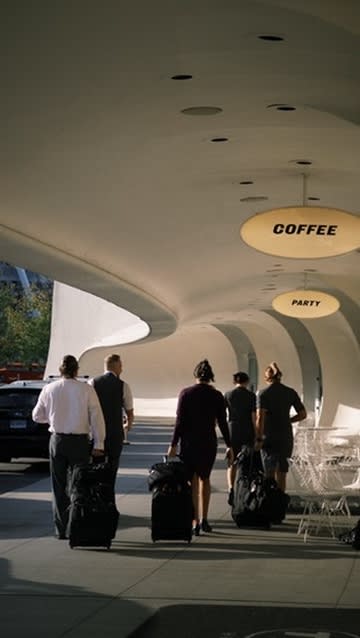
From outside, the terminal resembles a bird with spread wings. But inside, the metaphor dissolves. You stop thinking about birds and start thinking about space — how it flows, how it pulls you forward, how it makes the act of walking feel like gliding.
Red Carpets and Curved Tubes
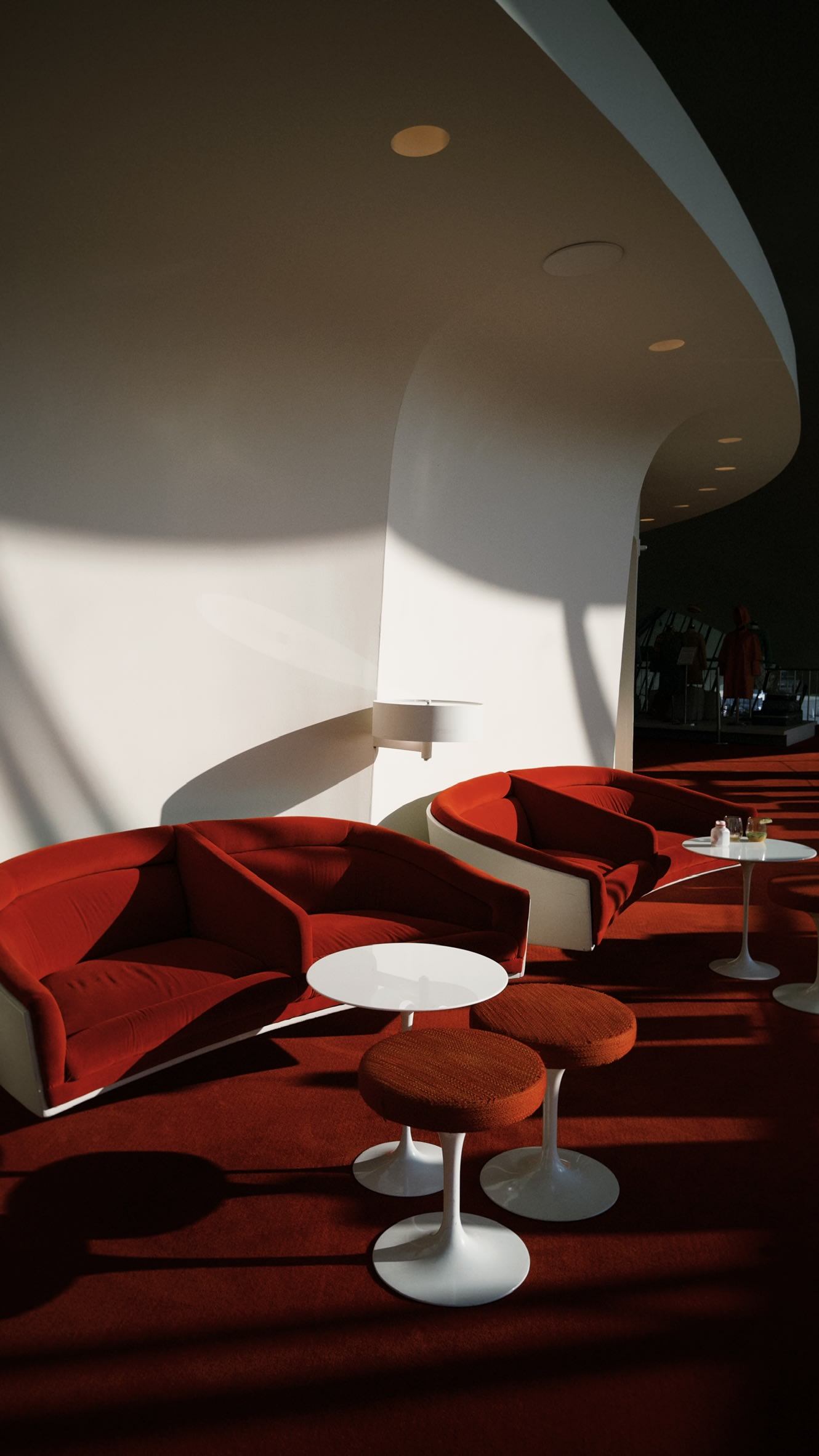
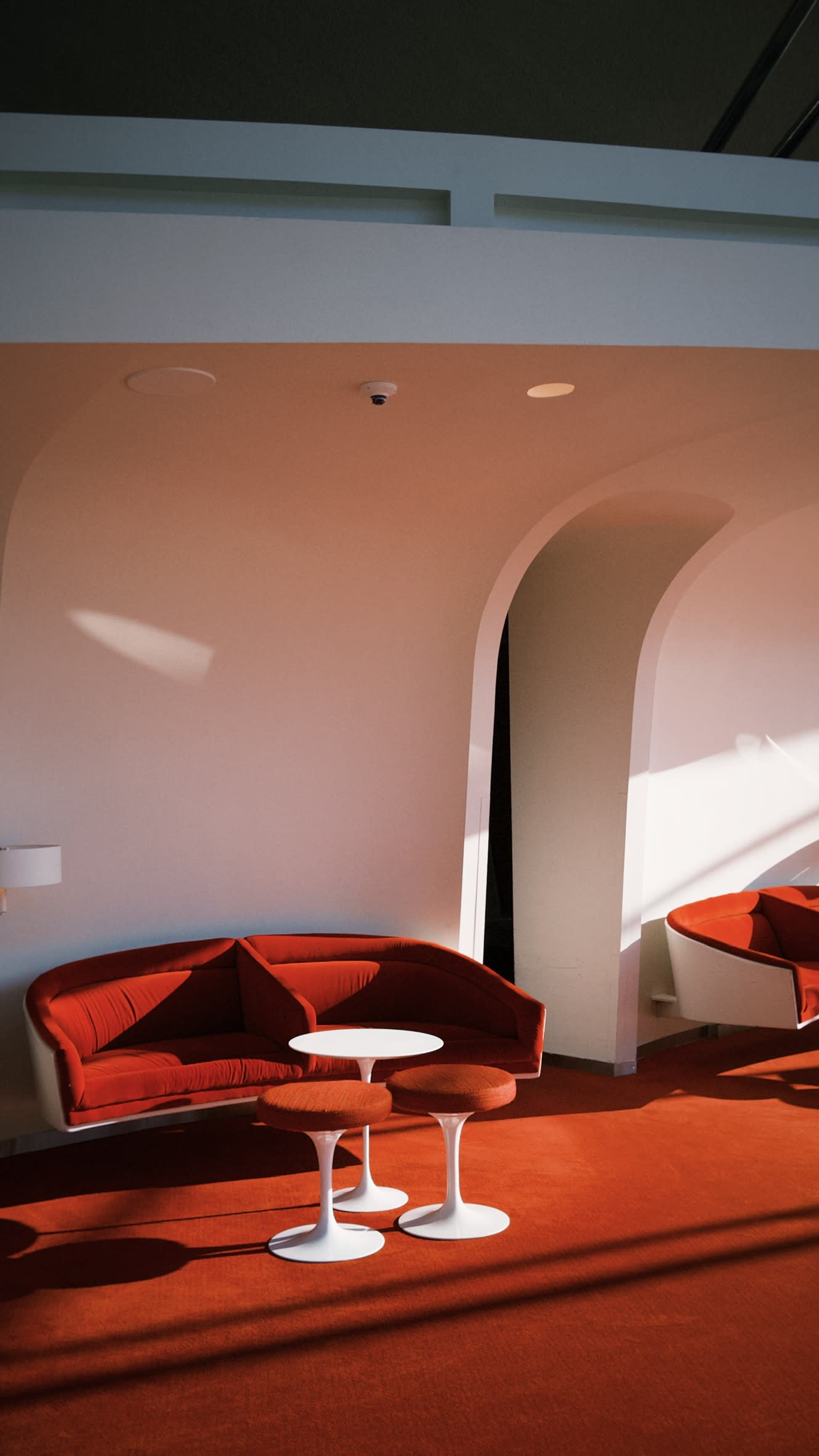
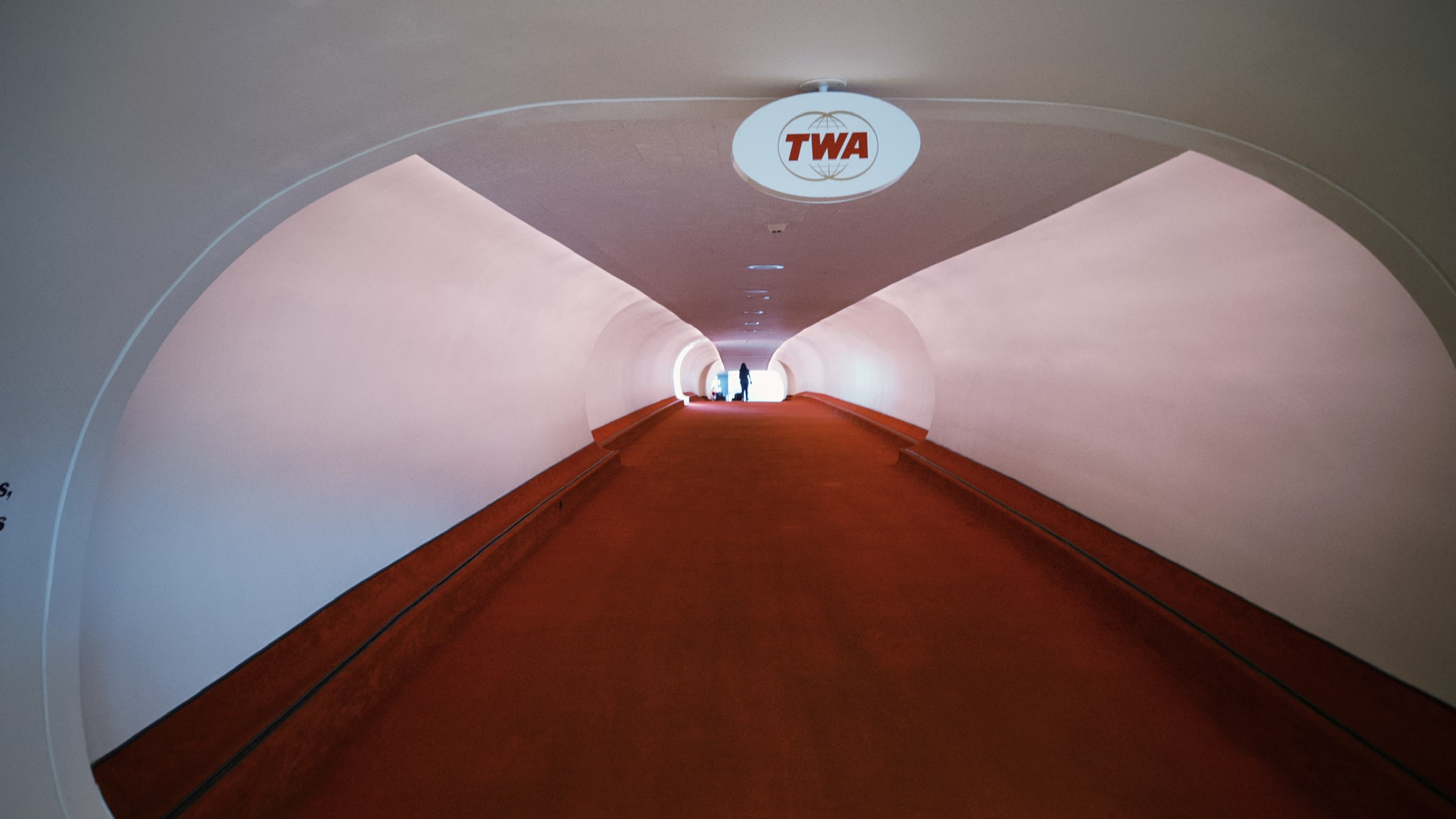
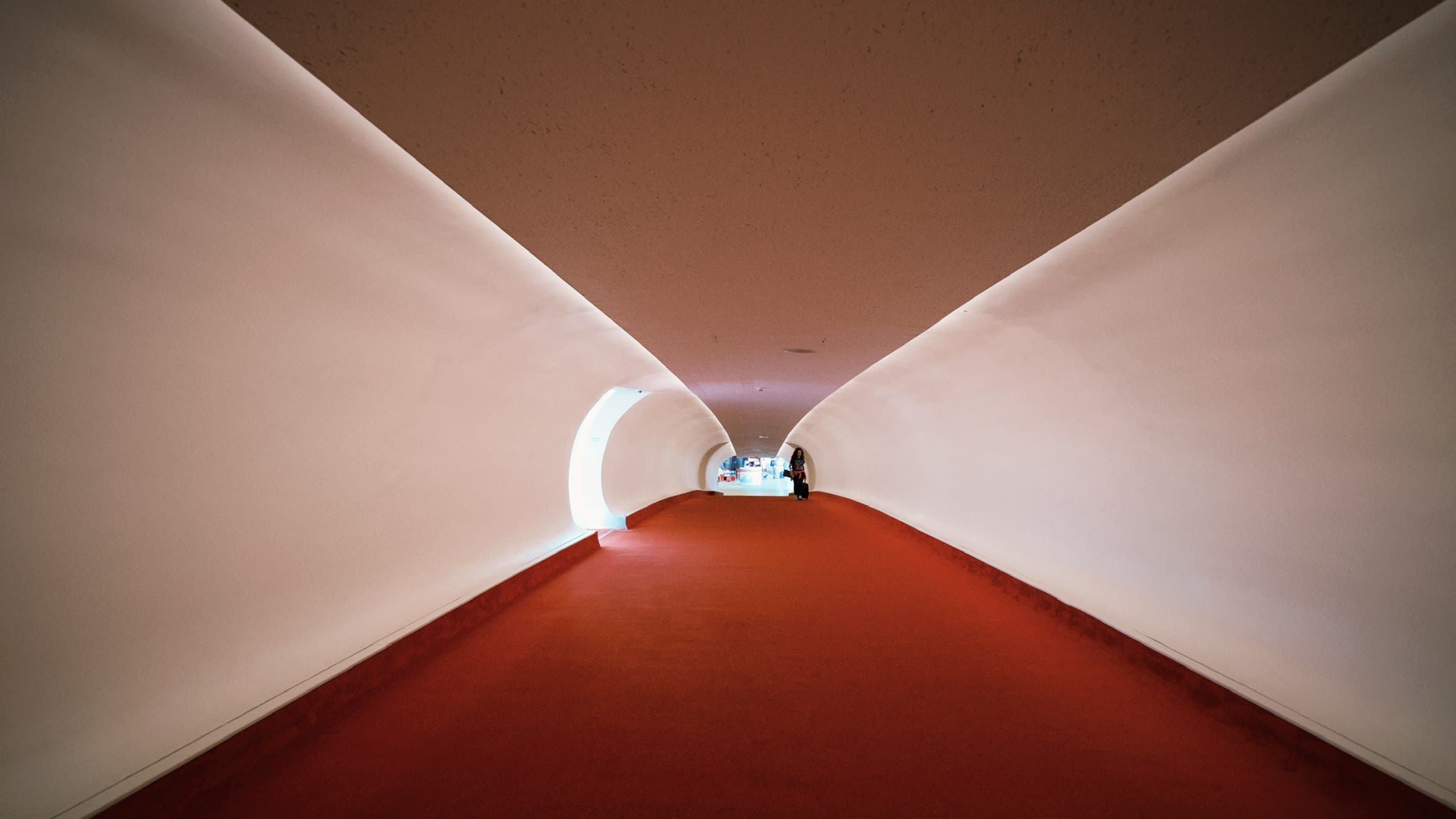
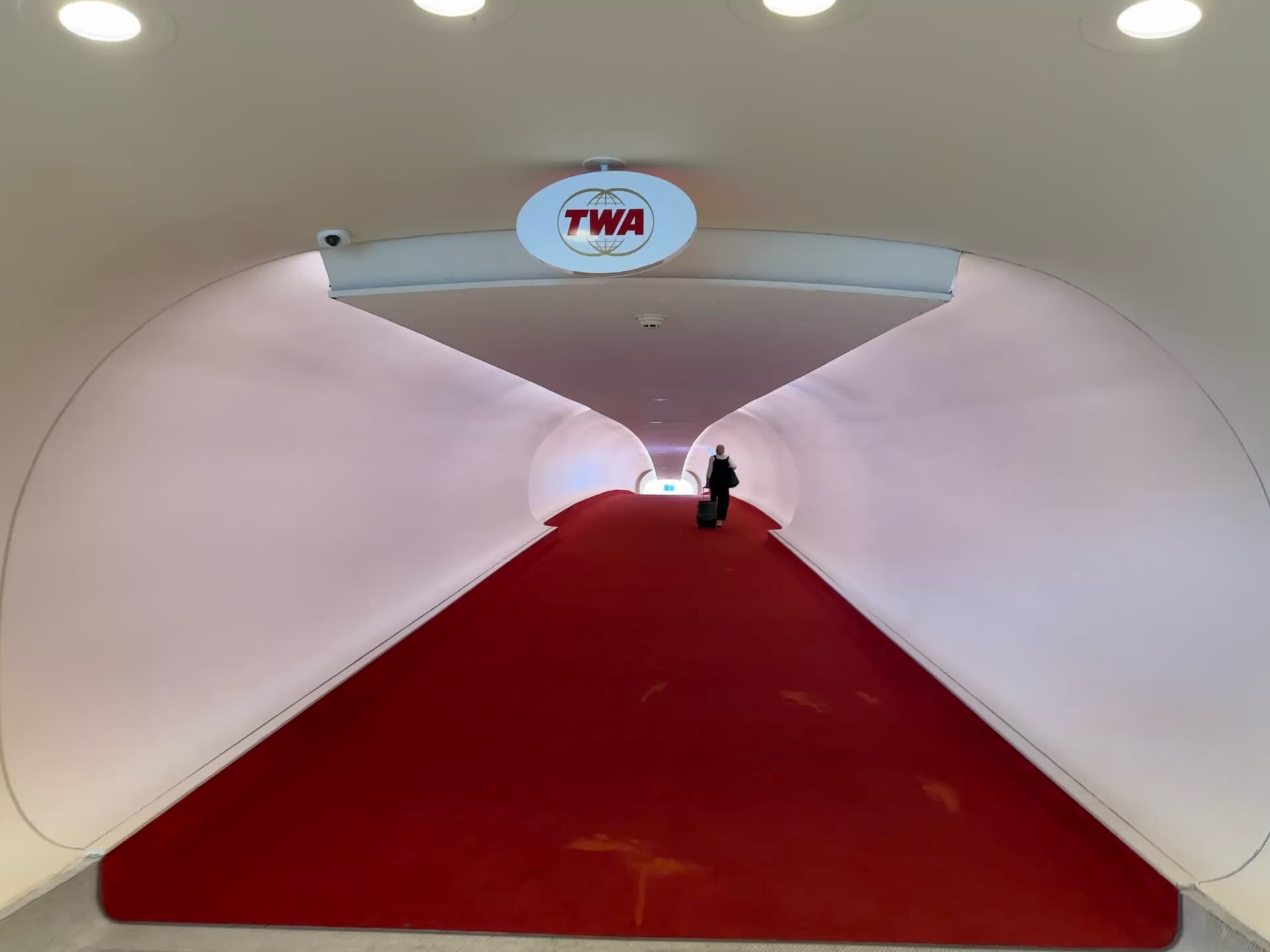
The interior details match the ambition of the shell. Departure tubes — enclosed walkways to the gates — extend from the main hall like tentacles, their round cross-sections reinforcing the organic vocabulary. The Chili Pepper Red carpet, originally specified by Saarinen, has been faithfully restored.
I want passengers to experience the excitement of travel. The building should be a place of movement and light.
The ticketing counters, the signage, the split-flap departure boards — everything participates in a total design vision that treats air travel as ceremony rather than transaction.
The TWA Hotel
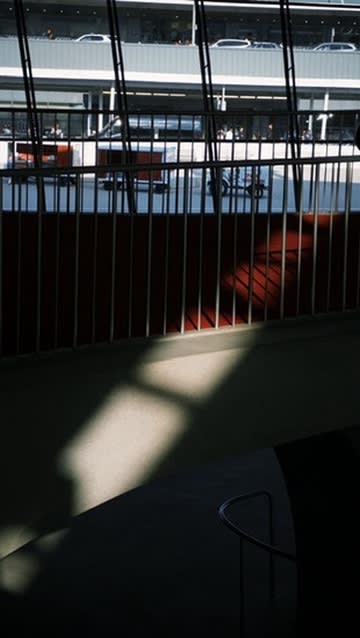
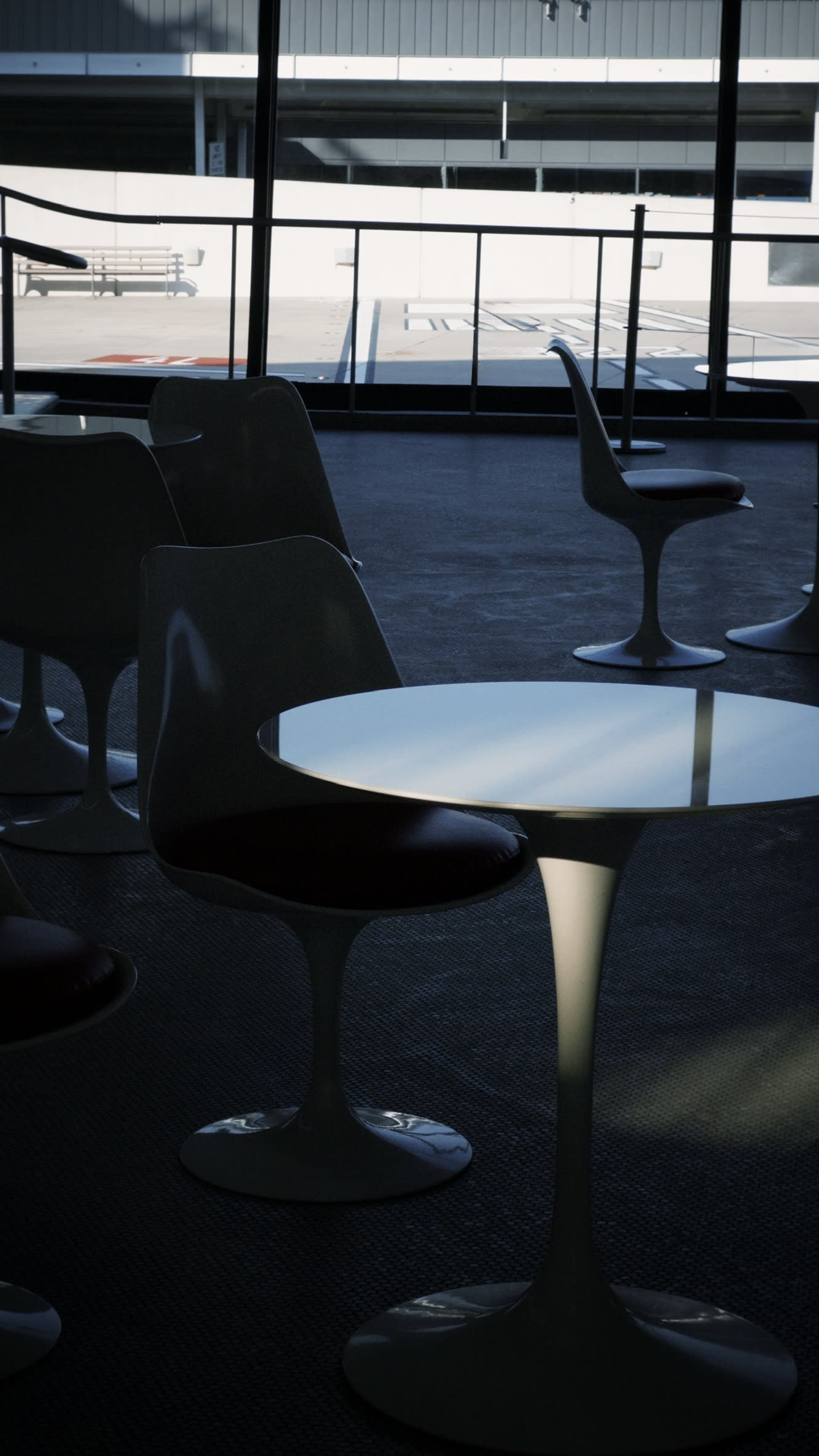
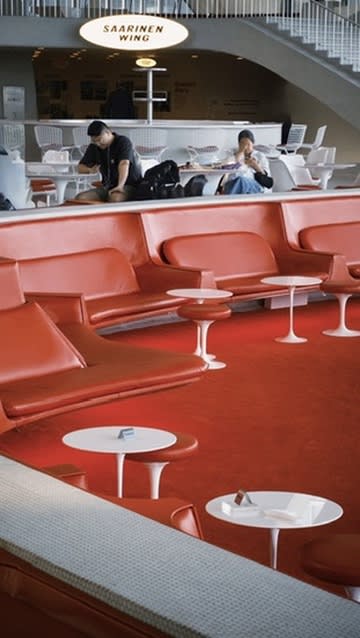
After decades of abandonment and preservation battles, the terminal reopened in 2019 as the TWA Hotel. The main hall serves as the lobby, restored to its 1962 condition. You can sit in the Sunken Lounge, order a cocktail, and watch planes taxi past the floor-to-ceiling windows.
The conversion is imperfect — hotel functions crowd into spaces designed for transit, and the new guest room wings flanking the terminal are generic by comparison. But the hall itself is immaculate. The concrete glows warm under carefully calibrated lighting, and for a moment you can believe that air travel was once an act of optimism.
Concrete as Fabric
What strikes you most is how soft the concrete appears. Saarinen treated it not as a structural material but as a fabric — draped, folded, stretched across the vaults. The formwork marks are visible but gentle, like the weave of cloth. This is concrete at its most expressive, refusing the brutalism that would define the following decade.
—gallery