Villa La Roche
2 min read
Villa La Roche is not a house you stand in. It is a house you move through — a sequence of spaces unfolding along a ramp, a staircase, a corridor, each turn revealing a new proportion of light and volume.
The Promenade Architecturale
Le Corbusier designed Villa La Roche in 1923 for the Swiss banker Raoul La Roche as both a residence and a gallery for his collection of Purist paintings. The plan is organized around movement. You enter at ground level and are immediately drawn upward — along a ramp that curves through the triple-height gallery, past walls of paintings, toward light that enters from above.
This is what Le Corbusier called the promenade architecturale: architecture experienced not as a static image but as a sequence in time. The building only makes sense when you walk it.
The Five Points
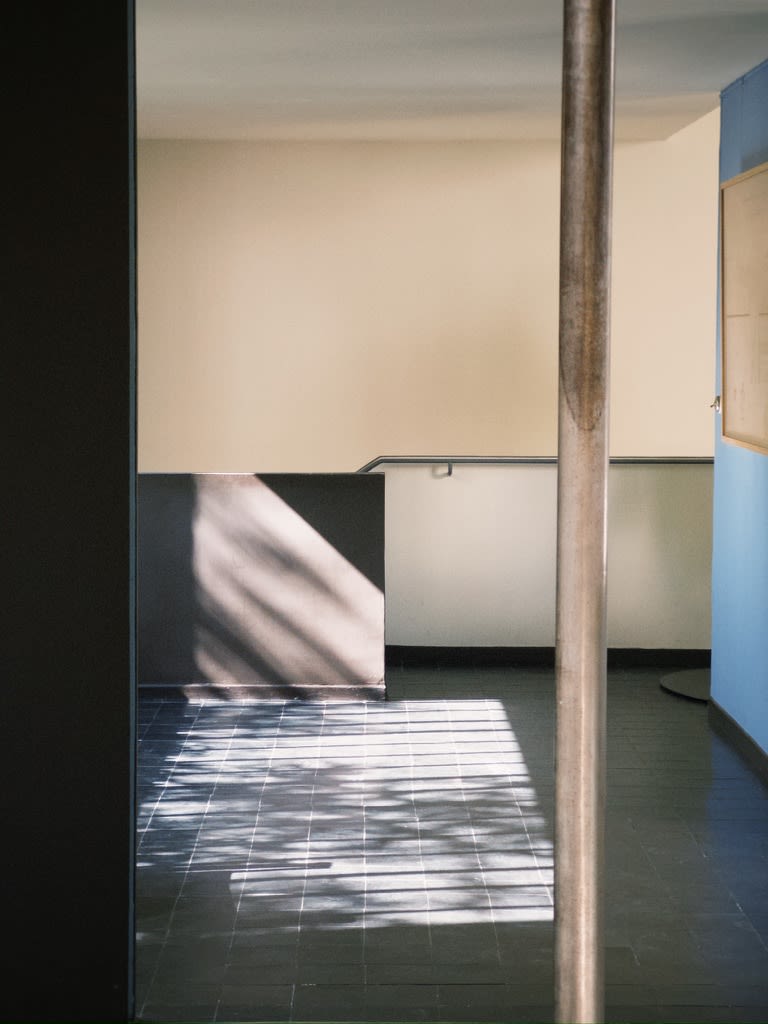
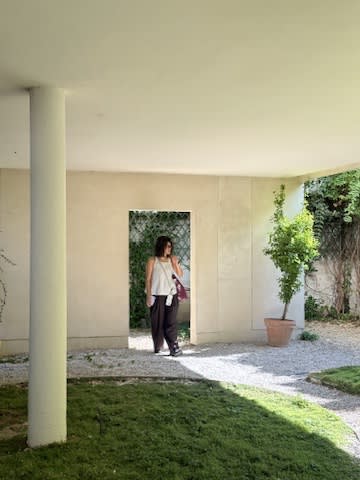
Villa La Roche is an early demonstration of the five points of architecture that Le Corbusier would codify a few years later — pilotis, free plan, free facade, ribbon windows, roof garden. The columns lift the building off the ground. The walls, freed from structural duty, curve and bend according to the demands of light and space rather than gravity.
The house should be a machine for living in — but also for seeing in.
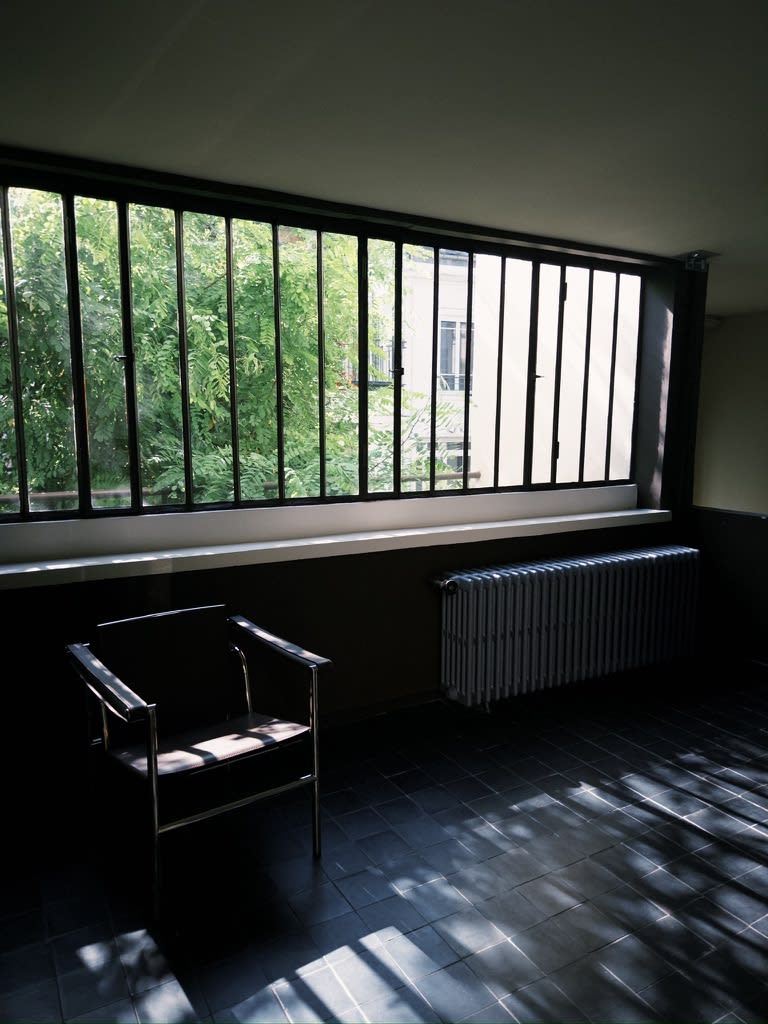
The ribbon windows along the south facade fill the gallery with even, diffused light. The fenestration is precise: each opening is calibrated to a specific view or a specific quality of illumination.
The Gallery
The triple-height gallery is the heart of the house. The ramp rises along one wall, and from each point along its ascent the space below appears different — wider, narrower, deeper. The paintings on the walls are not hung in a gallery; they are embedded in architecture. The curve of the balcony, the angle of the ramp, the rhythm of the columns — everything conspires to frame the act of looking.
The Fondation
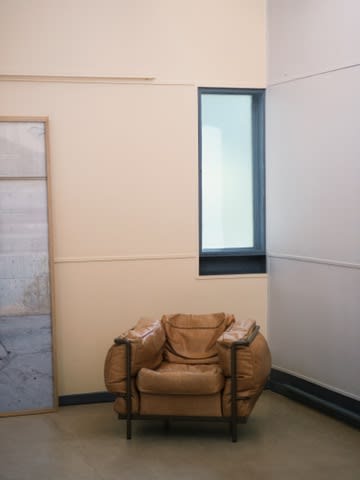
Today the house serves as the Fondation Le Corbusier, preserving both the architecture and the archive. The spaces have been maintained close to their original condition — the polychrome walls in dusty pink and pale blue, the built-in furniture, the careful placement of each window. Walking through, you understand that this house was never about comfort. It was about conviction.
—gallery