Villa Savoye
3 min read
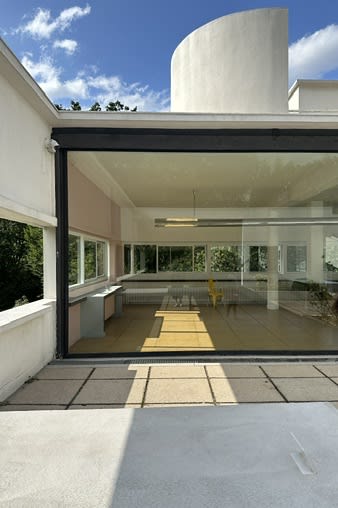
Villa Savoye sits in a field outside Paris like a white box on stilts, and that is exactly what it is. Le Corbusier built it in 1929 as a weekend house for the Savoye family. It became the most influential house of the twentieth century.
The Five Points
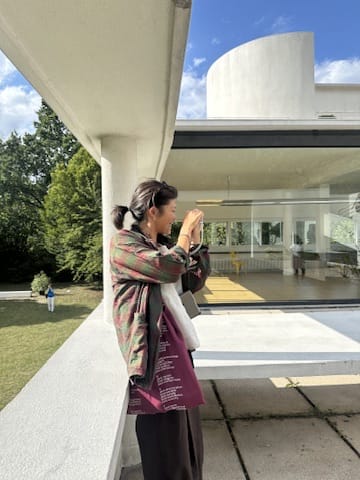
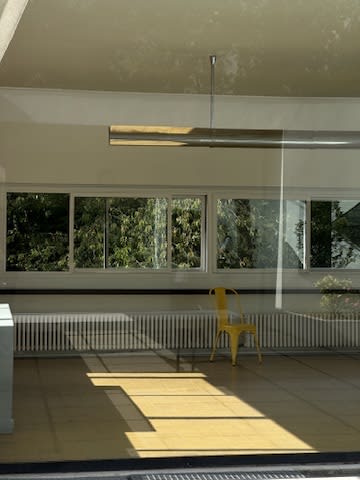
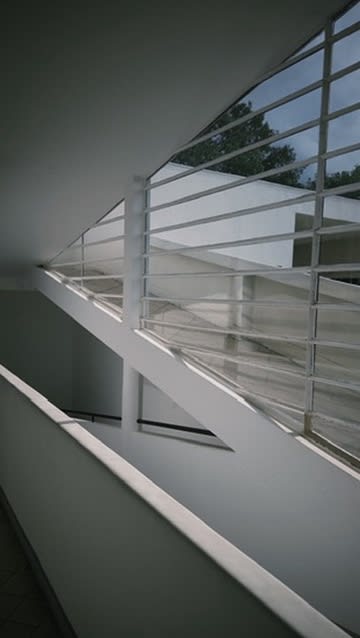
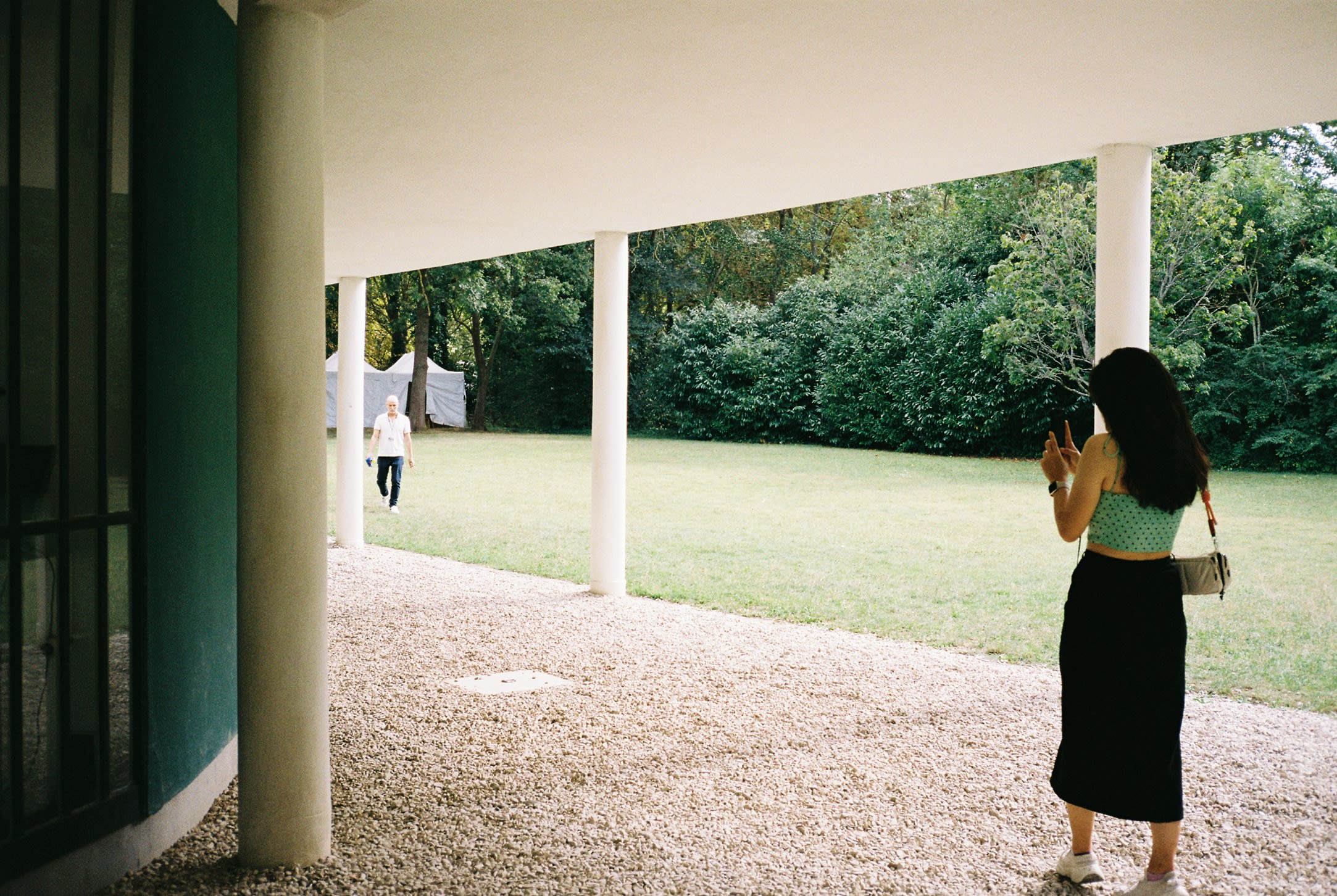
Everything Le Corbusier believed about architecture is here, stated plainly. The pilotis raise the house off the damp ground and free the landscape to pass beneath. The free plan allows walls to fall wherever the interior demands, independent of structure. The free facade — unshackled from load-bearing duty — opens into horizontal ribbon windows that wrap the building in light. And on the roof, a garden reclaims the ground the building occupies.
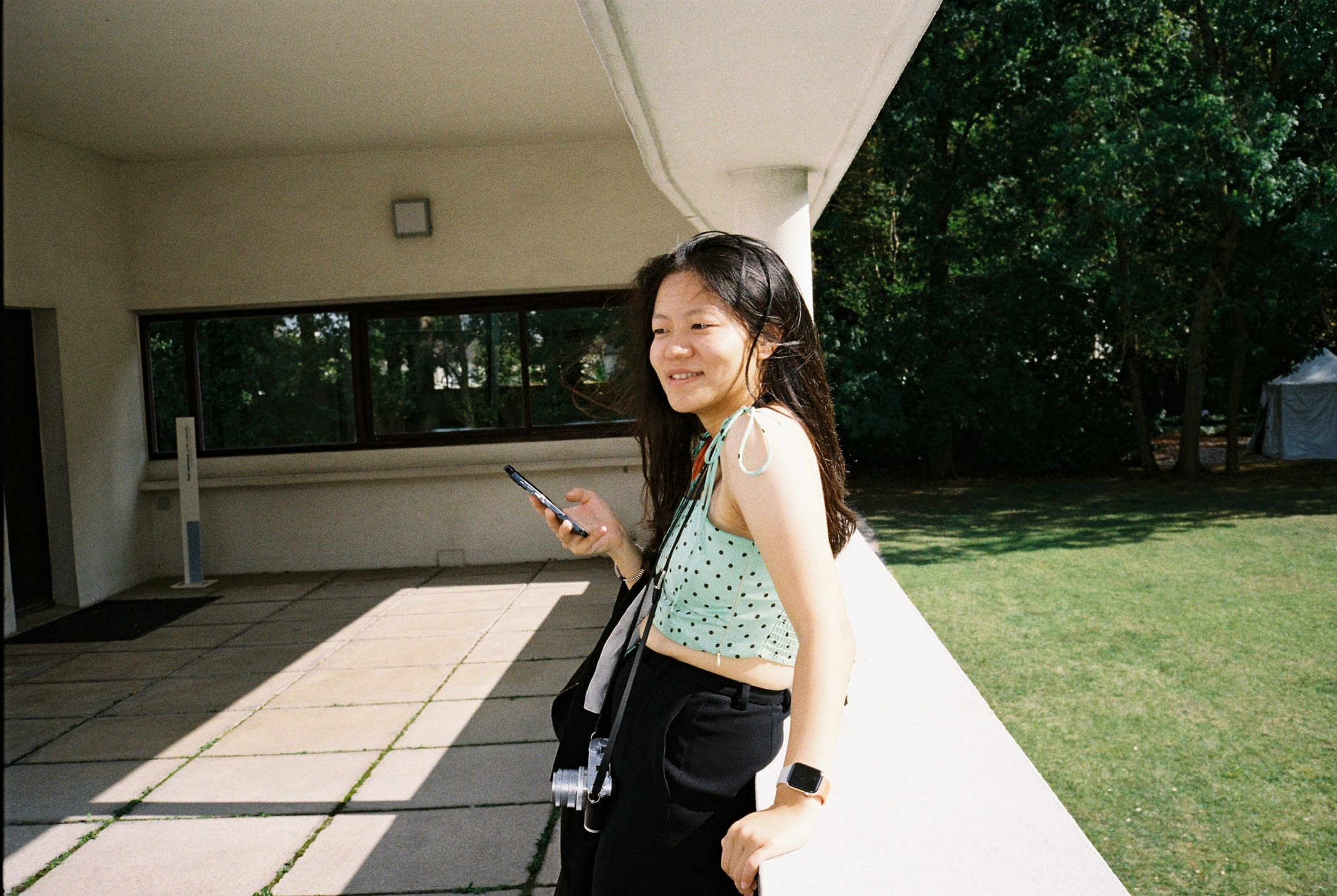
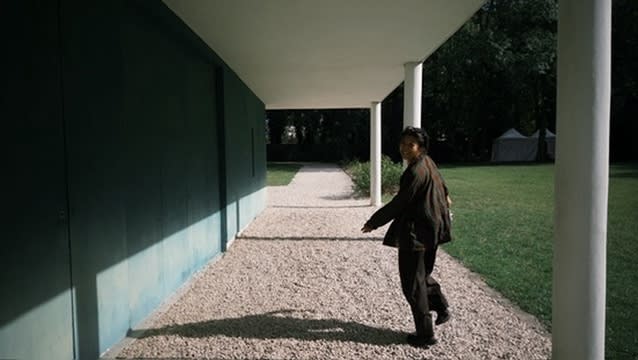
These are not abstract ideas. Standing beneath the pilotis, watching the lawn continue uninterrupted under the house, you understand the proposition physically.
The Ramp
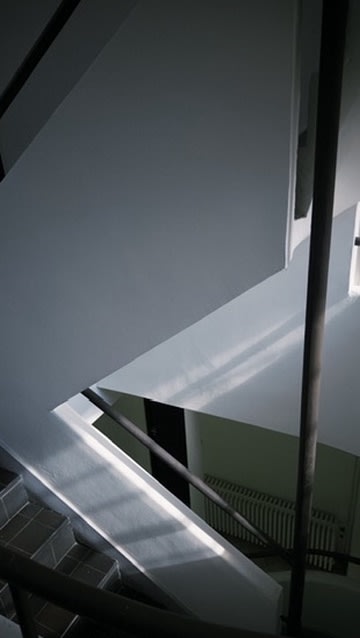
The ramp at the center of Villa Savoye is the building's spine. It rises from the ground floor through the main living level and onto the roof terrace in a slow, continuous ascent. Le Corbusier preferred ramps to stairs — stairs interrupt, ramps connect. The body stays in motion, and the architecture unfolds as a continuous experience rather than a series of discrete floors.
Architecture is the masterly, correct, and magnificent play of volumes brought together in light.
From the top of the ramp, framed by the curved windscreen of the solarium, the landscape of Poissy stretches out in every direction. The house becomes a device for seeing.
White Walls and Wet Fields
The white stucco has always been a problem. It stains, it cracks, it leaks. The Savoye family complained bitterly — Madame Savoye wrote to Le Corbusier that rain was pouring through the skylight onto her bed. The house was barely habitable, and the family abandoned it after just a few years.
But the whiteness is the point. It abstracts the house from its material reality, turning it into pure form — a geometric solid floating above the green. The impracticality is inseparable from the idealism.
The Machine for Living
Villa Savoye was never really a house. It was an argument — that architecture could be rational, universal, reproducible. That a building could be lifted off the earth and still belong to it. That light, air, and movement were the true materials of architecture, and walls were merely what shaped them.
The argument won. Every glass box, every white cube, every building raised on columns owes something to this house in a field in Poissy.
—gallery